tin tức
Comments Off on Chinese authorities to visit Irish beef plants in the coming weeks

Chinese authorities to visit Irish beef plants in the coming weeks

Được Đăng Bởi | August 17, 2017 |

A group of Chinese inspectors is set to visit a number of Irish beef plants later this month.

Members of the Chinese Certification and Accreditation Administration (CNCA) are due to arrive in Ireland during the last week of August to inspect a number Irish beef processing facilities.

This visit is a step in the right direction for Irish beef exporters’ hopes of accessing the lucrative Chinese market. And, a successful outcome would further advance the process of opening the market to Irish beef.

This is particularly important as China was the second-largest importer of beef on the global stage in 2016. In addition, Chinese beef imports are expected to reach 1.2 million tonnes by 2025.

Back in April, the Minister for Agriculture, Michael Creed said it’s “a case of when, rather than if” when it comes to accessing the Chinese market with Irish beef.

He made the comments following a meeting with the the Chinese AQSIQ Minister Zhi Shuping, who has responsibility for the Chinese Quarantine and Inspection Service.

At the time, both minsters signed a formal protocol on beef exports to China. The protocol specifically focused on frozen beef under 30-months-of-age.

US Beef Moves A Step Closer To Accessing China

American beef exports to China are set to resume again after a 14-year absence, the US Department of Agriculture (USDA) announced in June.

The US has reached an agreement with Chinese officials on export protocols, which will allow for shipments to begin.

China’s beef imports have increased from $275 million in 2012 to $2.5 billion in 2016, according to the USDA. China was the second-largest importer of beef in the world last year, taking in 825,000t.

However, the US has been banned from China’s market since 2003. China implemented the ban on US beef amid concerns about BSE.

Following negotiations, it has been agreed that US beef exports to China must meet specified requirements under the USDA Export Verification (EV) Programme.

Source: Agriland. Date: 2017-08-17

Comments Off on Japan, South Korea Counter Weaker Chinese Pork Imports

Japan, South Korea Counter Weaker Chinese Pork Imports

Được Đăng Bởi | August 17, 2017 |

JAPAN, SOUTH KOREA & CHINA – Both Japan and South Korea have reported year-on-year increases in fresh/frozen pork imports during the first half of 2017, according to Bethan Wilkins, AHDB Pork analyst. 

With Chinese import demand slowing in the second quarter, these destinations have become increasingly important outlets for the global pork market.

During the first six months of 2017, Japan imported 459,000 tonnes of pork, 7 per cent more than in the same period last year. Shipments from Canada in particular were 19 per cent higher year-on-year.

Meanwhile, the other key suppliers, the EU and US, saw more modest increases of 3 per cent and 4 per cent respectively.

The expansion in EU shipments was largely driven by increasing imports from Spain in the second quarter. Conversely, US shipments actually fell 1 per cent on the year in Q2.

For South Korea, fresh/frozen pork imports increased 12 per cent on 2016 during the first half of the year, reaching 257,000 tonnes.

Disease outbreaks in both the beef and poultry sectors have reportedly boosted demand for pig meat this year.

EU shipments, which were up 25 per cent year-on-year and now provide over half of import requirements, drove the overall expansion.

Within this, volumes from Germany and the Netherlands were up 46 per cent and 58 per cent respectively.

The sharp increase in German shipments in particular is likely related to the temporary suspension of exports to China from a number of key plants earlier this year.

The UK also supplies pig meat to South Korea, albeit in small volumes (1,600 tonnes), but shipments were nonetheless 50 per cent higher than a year earlier.


Looking forwards, Chinese import demand is could remain behind 2016 levels in the latter half of the year.

Reports suggest there are expectations extensive farm closures could occur during Q3 under environmental regulations, leading to a temporary oversupply of pork on the market.

As such, how Japanese and South Korean import demand develops throughout the rest of 2017 could be key to global market balance.

Nonetheless, the outlook for South Korean demand at least seems positive, with pork likely to continue benefitting from disease pressures in the other protein sectors.

Source: The Pig Site. Date: 2017-08-17

Comments Off on Vietnamese forum promotes vegetables, fruits trade to China

Vietnamese forum promotes vegetables, fruits trade to China

Được Đăng Bởi | August 14, 2017 |

A forum promoting trade in Vietnamese and Chinese vegetables and fruits took place in the northern border province of Lang Son on August 11.

Speaking at the event, Vice Chairman of the provincial People’s Committee Ly Vinh Quang said Lang Son has an important geographical location in the Nanning – Lang Son – Hanoi – Hai Phong economic corridor, and has been a gateway for Vietnamese farm produce to access the Chinese market via Tan Thanh, Coc Nam and Huu Nghi border gates.

In 2016, Lang Son’s border gates allowed the export of nearly 478,514 tonnes of dragon fruit; 223,455 tonnes of watermelon; 240,345 tonnes of longan fruit; 81,198 tonnes of litchi; 8,135 tonnes of rambutan; and 17,837 tonnes of dried cashew nuts to China.

Over the past years, the province has opened additional auxiliary border gates such as Na Hinh, Co Sau, Binh Nghi, expanded roads leading to border gates, built infrastructure in border gates, and improved the capacity of goods transit and customs clearance.

Quang took the occasion to commit all possible support to enterprises.

Vice Mayor of Guangxi’s Chongzuo city said Chongzuo borders Lang Son province and shares similar customs and climate, adding that there remains room for bilateral cooperation in cultivation and farm produce processing.

Each year, Vietnam exports 1,866,000 tonnes of farm produce worth 6.89 billion CNY to China via Chongzuo’s border gates. Vietnamese fruits such as litchi, mango and dragon fruits are popular in China.

The Ministry of Industry and Trade’s Border and Mountainous Trade Department said farm produce, including fresh fruits are mostly exported to China via border gates, accounting for more than half of the total. Several commodities saw export growth such as rubber, cassava powder, fisheries, confectionary, coffee and tea.

According to the Ministry of Agriculture and Rural Development’s Plant Protection Agency, Vietnam shipped more than 2 million tonnes of fruits and vegetables worth 1.6 billion USD to China last year. In the past seven months of this year, the country earned over 1.3 billion USD from exporting roughly 1.2 million tonnes of fruits and vegetables to the neighbour.

Source: VNA. Date: 2017-08-14

Comments Off on ‘NI’s approval to export pork to China could be worth in excess of £10 million’

‘NI’s approval to export pork to China could be worth in excess of £10 million’

Được Đăng Bởi | August 14, 2017 |

Northern Ireland’s final approval to export pork to China could be worth in excess of £10 million (€11 million) to the local agri-food industry, according to the North’s Chief Veterinary Officer, Robert Huey.

He made the comments as he welcomed the announcement of the approval, which was made by the Department of Environment Food and Rural Affairs (DEFRA) earlier today.

This welcome news follows concerted efforts by the Department of Agriculture, Environment and Rural Affairs (DAERA) over time working closely with DEFRA, he said.

“Ministerial visits to China by former Agriculture Ministers, O’Neill and McIlveen, in support of our industry were an essential element of this success story.

“We are also indebted to Madam Wang, Consul General of the People’s Republic of China in Belfast for her support.

“This joined up approach between government, industry and key stakeholders is central to this announcement today,” Huey said.

The new UK export deal with China will bring a £200 million (€220.2 million) boost to the UK food industry and support 1,500 jobs, according to DEFRA.

In Northern Ireland, two slaughterhouses and two cold stores have now been given the green light to export pork.

The commencement of pork exports to China – including exports of trotters – will represent a major boost for the local pork industry, Huey explained.

“It will expand markets and secure jobs. By recommending approval for Northern Ireland, the Chinese authorities have recognised the rigorous standards we have in place to produce our high-quality, safe and wholesome pork.

“This approval to export pork represents a tangible outcome in DAERA’s long-term engagement strategy with China and also represents achievement in securing access to one of the primary new markets outlined in the Going for Growth initiative,” he concluded.

Source: Agriland. Date: 2017-08-14


Comments Off on Tech-savvy generation a growing hope for Japan’s agriculture sector

Tech-savvy generation a growing hope for Japan’s agriculture sector

Được Đăng Bởi | August 14, 2017 |

Farmers who are younger and business- and tech-savvy are transforming Japan’s shrinking agriculture sector with cutting-edge techniques and marketing strategies, giving new hope to an industry in slow decline.

Mr Hiroki Iwasa, a 40-year-old information technology entrepreneur with an MBA, grows strawberries in seven high-tech greenhouses, where computers set the temperature and humidity to optimum growing conditions and ensure the rows of bushes are sprayed with water at precise times.

He markets his Migaki Ichigo brand of strawberries directly to fancy department stores in Tokyo, where they go for as much as 1,000 yen (S$12.40) apiece, as well as to customers in Hong Kong, Singapore, Taiwan and Thailand, where Japanese produce has an excellent reputation.

Such changes, while small, come as Prime Minister Shinzo Abe pushes to reform Japan’s hidebound farm industry where small-plot holdings still dominate, the average farmer is aged over 66, and the sector’s contribution to the economy has fallen by 25 per cent since its peak in 1984.

They should also make Japan more resilient if the United States tries – as Trade Representative Robert Lighthizer has hinted – to prise open markets such as rice and beef that are protected by tariffs.

Mr Iwasa was running an IT company and getting an MBA in Tokyo when his coastal home town of Yamamoto in the north-eastern prefecture of Miyagi, an area famous for strawberries, was hit by the March 2011 tsunami.

He rushed to help with relief efforts and later saw an opportunity to combine his tech skills with the specialised know-how of a local farmer.

He now heads six-year-old GRA Inc, which has 20 full-time employees and 50 part-timers, including four dedicated to managing overseas orders.

“Farmers’ intuition and experience may not always result in a good harvest. So it’s crucial that we capture that as explicit knowledge in technology and automation, and use that to increase productivity,” Mr Iwasa said.

“Nurturing professional farm managers is also needed.”

By leasing surrounding land, Mr Iwasa expanded his farm to 2ha, about 10 times the size of an average strawberry farm in Japan.

Such larger-scale agribusinesses, many using new technologies, are the future of Japanese farming, says Miyagi University professor emeritus Kazunuki Ohizumi, who has been studying farming trends in Japan for decades.

“Large-sized farmers are the ones to revitalise Japan’s agriculture, which will be changed significantly,” he said.

“Of course, IT, robots and artificial intelligence are needed, which will generate jobs to handle such technologies.”

Japan is seeing a shift towards company-run farms, whose numbers have jumped from 8,700 in 2005 to 20,800 last year.

The number of young people working in agriculture is slowly rising. The farm industry added just over 23,000 workers under the age of 49 in 2015, up from fewer than 18,000 five years ago.

Source: Reuters. Date: 2017-08-14


Comments Off on Agriculture sector does well as China buys more fruits and veggies

Agriculture sector does well as China buys more fruits and veggies

Được Đăng Bởi | August 14, 2017 |

Agricultural products exported to China now account for 50 per cent of total border trade flow between the two countries, signifying greater approval from Chinese consumers, officials say.

The surge in cross-border trade of agricultural produce was highlighted last Friday at a forum jointly held by the Ministry of Agriculture and Rural Development (MARD) and the Lạng Sơn People’s Committee.

The forum discussed ways to further increase the flow of Vietnamese fruit and vegetables into Chinese markets via official border trade.

The Agriculture Ministry’s Plants Protection Department (PPD) announced that in total, Việt Nam exported over two million tonnes of fruits and vegetables worth US$1.6 billion to China last year. Corresponding figures for the first seven months of this year are 1.2 million tonnes and $1.3 billion.

Key exports are fresh fruits and vegetables, with strong growth seen in rubber-based products, tapioca, coffee and tea.

The Ministry of Industry and Trade’s (MoIT) Mountainous and Frontier Trade Department (MFTD) said the bilateral agricultural trade surplus is financial boost for Vietnamese farmers, merchants and people living within the border region.

They said the produce being exported to China enjoyed the advantage of having more favourable cultivation conditions, and as such were always welcomed by Chinese buyers.

The MFTD said they have been working tirelessly with their Chinese counterparts to implement enabling policies and regulations to shape the trade flow between the two countries.

These include stricter customs checks, better quality control, transportation and storage infrastructure before clearance, as well as the opening of auxiliary border gates.

As a result, exports of fresh fruits and vegetables to China has been increasing rapidly in quantity and quality, with around 478,514 tonnes of dragon fruit, 223,455 tonnes of watermelon, 240,345 tonnes of longan and 81,198 tonnes of lychee going through border gates in Lạng Sơn Province alone last year.

Corresponding figures so far this year are 273,154 tonnes of dragon fruits, 167,035 tonnes of watermelon and 19,505 tonnes of lychee, worth of $203 million, $75 million and $9.3 million, respectively.

Similar tastes

Huang Tan Mei, Vice Mayor of Chongzuo City in Guangxi Province, said at the forum that thanks to many similarities in tastes and demands between people on both sides of the Vietnamese- Chinese border, trade volume should increase steadily in the years to come.

The annual average agricultural export turnover from Việt Nam to Chongzou is now 1.86 million tonnes through Lạng Sơn border gates alone, Huang said.

She also believed that with the leadership of both countries maintaining tight co-operation through information exchanges and encouraging agricultural production, there was always room for growth as more and more Vietnamese products were gaining Chinese consumers’ trust.

Lý Vinh Quang, Vice Chairman of Lạng Sơn Provincial People’s Committee, said that authorities are committed to supporting businesses and creating favourable conditions for export growth through more transparent rules and procedures.

According to the Tân Thanh Customs Branch under the Lạng Sơn Customs Department, around 250 to 280 truckloads of fresh fruits with cold storage facilities go through the border gates everyday, averaging 2,600 tonnes to 3,200 tonnes.

Each day, across all border gates in Lạng Sơn Province, at least 1,500 trucks carrying Vietnamese agricultural products head for China.

Customs officers have been instructed to give clearance and transit priority to agricultural products, and online customs procedures that can be completed in three to five minutes have helped. Coupled with a newly upgraded parking lots system, storage spaces and customs office sin Lạng Sơn Province, the transport of fruits and vegetables to China has become much easier.

Productivity boost

At a recent, regular meeting of the ministry, Minister of Agriculture and Rural Development Nguyễn Xuân Cường said over the past seven months, the sector has seen growth in both productivity and export turnover.

Cường said in the the first seven months of 2017, Việt Nam had successfully exported $10.89 billion worth of agricultural products, a year on year increase of 18 per cent. Export of fresh fruits and vegetables fetched $2.03 billion, a year on year increase of 48.9 per cent.

According to a report from the MARD’s Department of Crop Production (DCP), the output of vegetables and fruits has increased and domestic prices have been stable this year. The prices of some fruits have even doubled from last year, like lychee at $1.69 per kilogramme or cashew at $2.2 per kilogramme.

Aquaculture has overcome harsh weather conditions to reach a production of 4 million tonnes in the first seven months, a year on year increase of 5 per cent, accounting for 57.4 per cent of the annual goal.

In the livestock sector, despite earlier pork price fluctuations, output has stabilised since July, with exports to China increasing slightly. Prices of eggs have almost doubled, mostly due to a rising demand for baking in preparation for the upcoming Mid-Autumn festival.

On average, as of July 2017, the number of pigs had dropped by 3.3 per cent, cows increased 2.2 per cent, and that of poultry increased by five per cent from the same period in 2016, on par with the sector’s annual growth rate of 3 per cent.

Agricultural exports have risen and the DCP estimates; market is also on the rise, with the DCP guaranteeing 2017’s annual growth up to 2.05 per cent.

Nonetheless, Cường asked all departments and agencies under the MARD work together on helping solve remaining problems in the sector.

For instance, they should co-operate with the Water Resources Department in fighting floods and landslides, or the Department of Livestock in stabilising domestic meat prices and export meat quality control.

The Minister also stressed that comprehensive steps should taken from the policy level onwards to guarantee stable exports outflows, ensuring quality of produce, product diversification and application of technological advances in both cultivation and post-harvest preservation.

Source: VNS. Date: 2017-08-14

Comments Off on Contract cattle kills sought by beef company, with sights set on Chinese supermarket trade

Contract cattle kills sought by beef company, with sights set on Chinese supermarket trade

Được Đăng Bởi | August 14, 2017 |

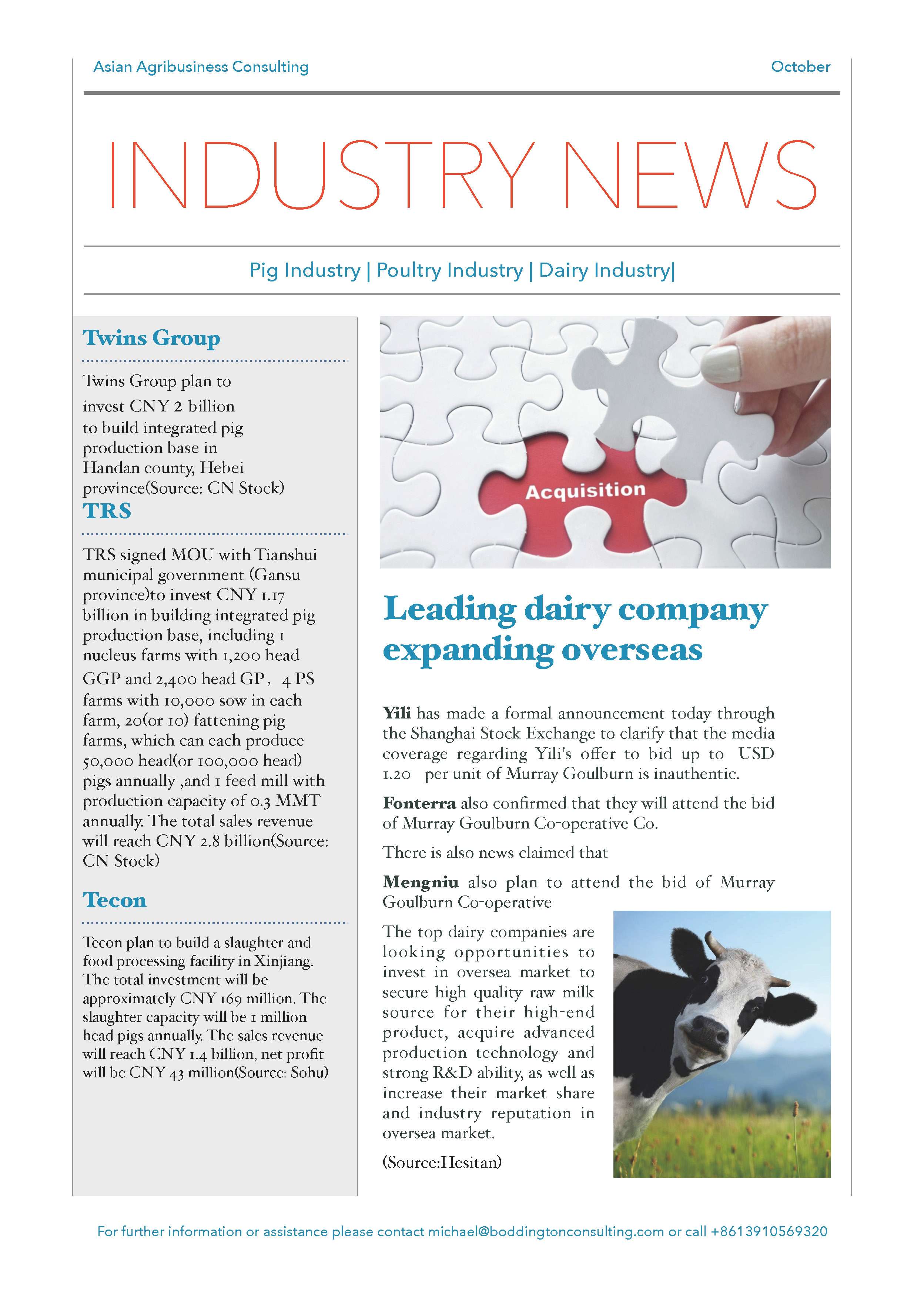

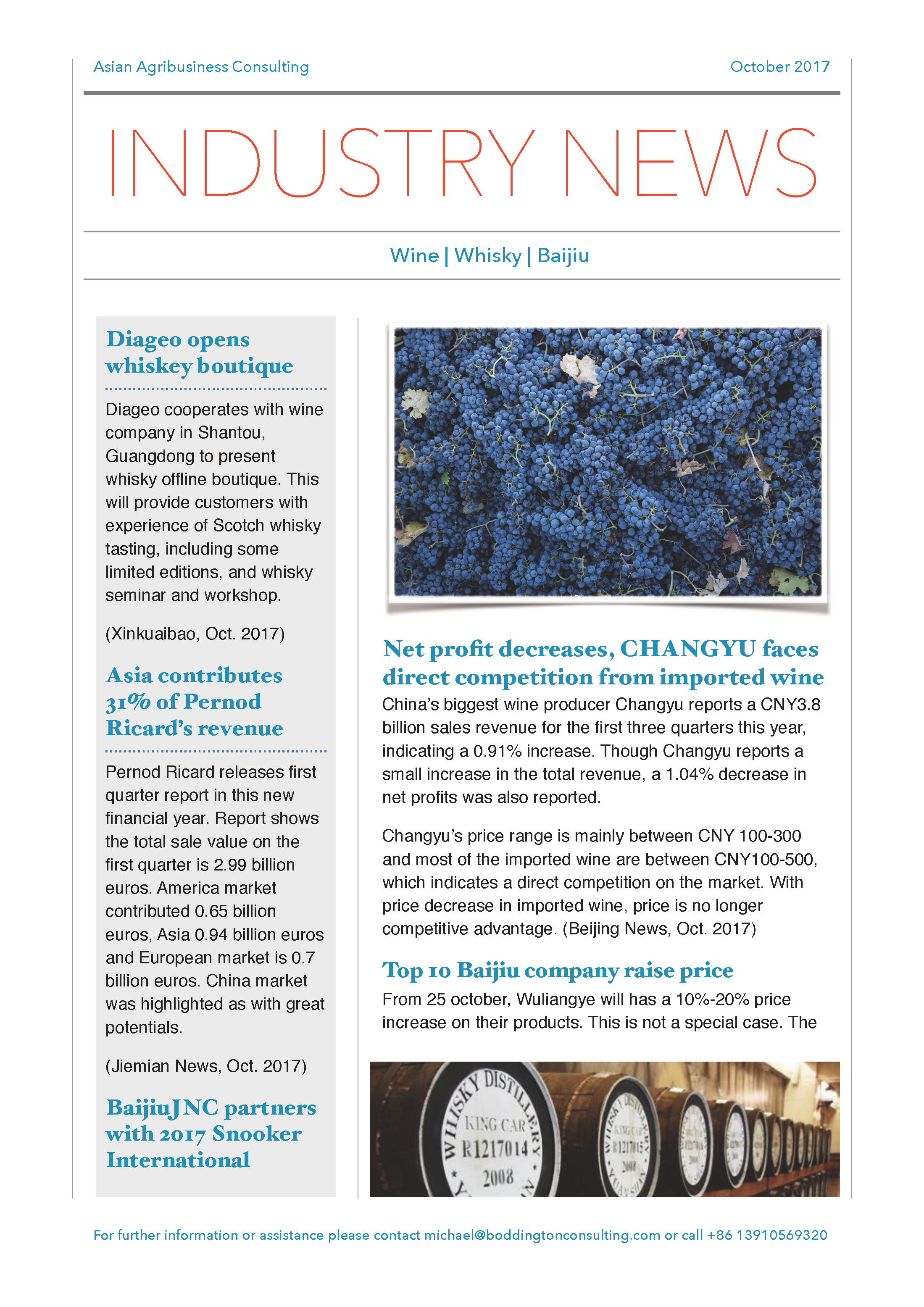
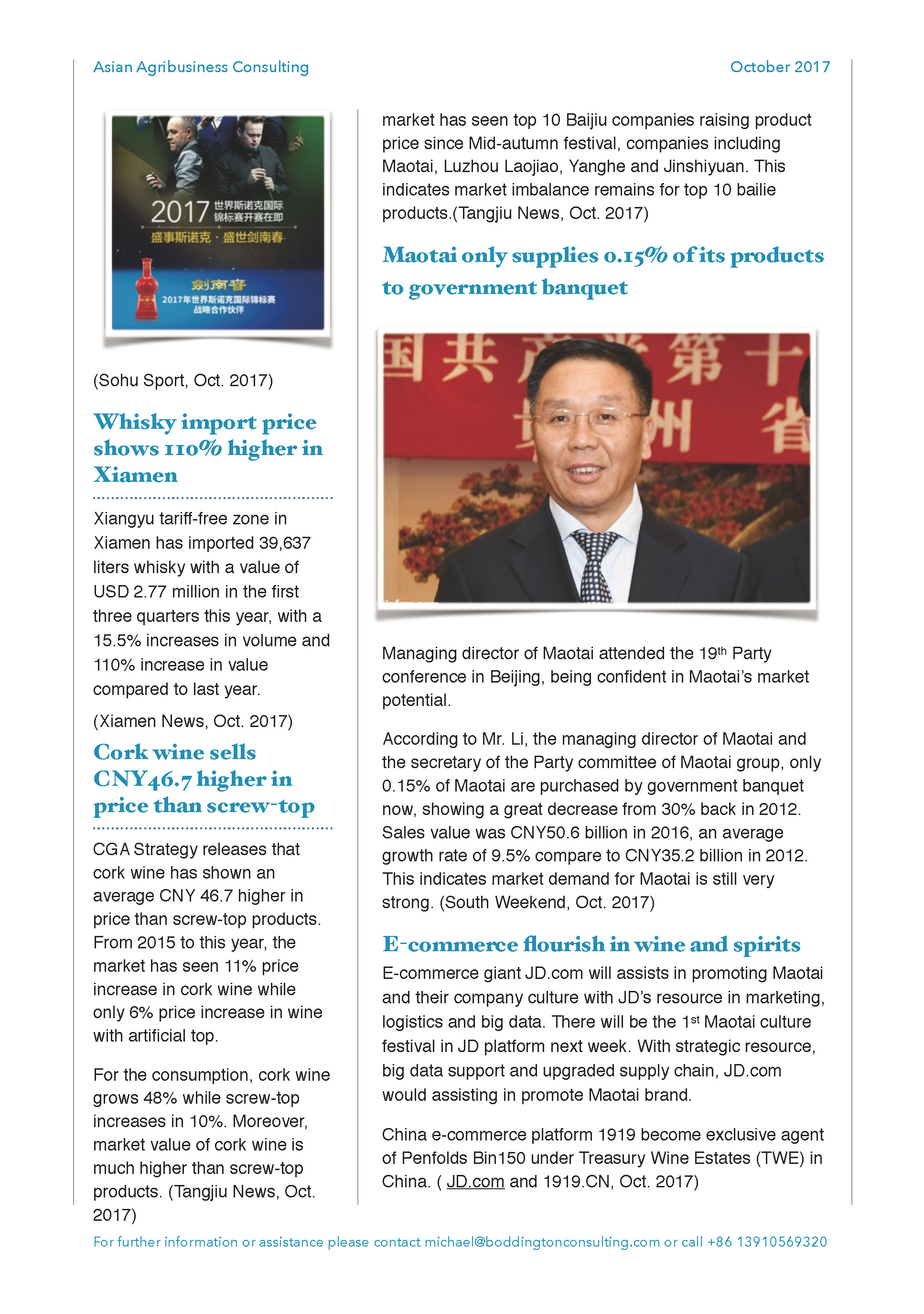
The demand for cheaper supermarket beef in China has prompted a new Australian joint-venture to directly source and process cattle for boxed export.

While the vertically integrated business model is already used by larger agribusinesses, Spinifex Beef does not own infrastructure or breed its own livestock. Instead it purchases cattle from producers and has the meat processed and packed on contract by existing abattoirs.

Supported by the 3 Mark Group, which already exports chicken and seafood to Asia, the company hopes to capitalise on existing customers to sell its beef.

Spinifex Beef has only sourced cattle from Queensland to date, but hopes to expand further, particularly into northern Australia.

Chief executive Ian Bradford said the company was targeting supermarket clientele as its market segment in China.

“We’re after a 500-gram-sized piece of meat, pre-packed here in Australia, labelled here in Australia, sent to China and pulled straight out of the chilled boxed onto the shelf,” he said.

“It’s a good model given we’ve got established clientele up there already.”

While agribusiness Elders is already well-established in the Chinese market targeting the high-end restaurant trade, companies operating out of northern Australia such as Hancock Pastoral and Australian Agricultural Company have taken steps recently with the intention to export live cattle and boxed beef to China respectively.

However the high price of cattle, and lack of available supply, make it difficult for firms to meet the much-heralded hunger of the Chinese.

Even if Spinifex Beef could source more stock from the north, Mr Bradford said there was a lack of available accredited processors.

“We’re hamstrung — we’d like to do a lot more out of the north without a doubt, however it’s just a lack of facilities,” he said.

“The type of meat that we’d like to produce for the supermarkets is more suited to come from our northern cattle because of the fat content.

“It’s a non-fat cut, very similar to the South-East Asian preferred type of meat that is boiled in a pot.”

While AACo’s Livingstone Beef processing facility near Darwin is currently seeking accreditation to access China, some other beef processors in Australia suffered a setback recently — hit with a temporary export ban.

Mr Bradford said he would like to engage with northern processors to have them slaughter cattle on a contract basis.

“Hopefully on the horizon we can organise a facility or get a facility across the line that can be accredited to go straight into China,” he said.

Source: ABC News. Date: 2017-08-14

Comments Off on China approves 10 international agricultural parks

China approves 10 international agricultural parks

Được Đăng Bởi | August 10, 2017 |

China has approved plans to establish international agricultural demonstration zones in 10 countries, the agriculture ministry said on Monday, as Beijing looks to extend its influence in the global farm sector.

The projects include an agriculture technology park in Laos, an agricultural products processing zone in Zambia and a fisheries park in Fiji, the ministry said in a statement on its website.

The demonstration zones are based on existing projects set up by Chinese firms, which will be given government backing to serve as platforms for other Chinese companies.

China also approved 10 pilot agricultural parks at home, which will be open to overseas investment. They are located in coastal, river and border regions to help encourage overseas co-operation and local connections.

The agricultural parks are part of China’s Belt and Road initiative, an ambitious plan to expand infrastructure and trade links between Asia, Africa, Europe and beyond.

China said in November it would launch the projects to boost co-operation with foreign firms, help its companies make better and less risky overseas agricultural investments, and bring in international experience and technology.

The plan was also highlighted in the government’s first policy statement this year, which said it would encourage exports and support companies to set up overseas production bases.

Source: Asia One. Date: 2017-08-08

Comments Off on Battle against China’s fake foods drives new tech frontier

Battle against China’s fake foods drives new tech frontier

Được Đăng Bởi | August 10, 2017 |

A bowl of ice cream on a hot day in Shanghai gave American Mitchell Weinberg the worst bout of food poisoning he can recall. It also inspired the then-trade consultant to set up Inscatech – a global network of food spies.

In demand by multinational retailers and food producers, Inscatech and its agents scour supply chains around the world hunting for evidence of food industry fraud and malpractice.

In the eight years since he founded the New York-based firm, Mr Weinberg, 52, says China continues to be a key growth area for fraudsters as well as those developing technologies trying to counter them.

“Statistically we’re uncovering fraud about 70 per cent of the time, but in China it’s very close to 100 per cent,” he said. “It’s pervasive, it’s across food groups, and it’s anything you can possibly imagine.”

While adulteration has been a bugbear of consumers since prehistoric wine was first diluted with saltwater, scandals in China over the past decade – from melamine-laced baby formula, to rat meat dressed as lamb – have seen the planet’s largest food-producing and consuming nation become a hotbed of corrupted, counterfeit, and contaminated food.

Mr Weinberg’s company is developing molecular markers and genetic fingerprints to help authenticate natural products and sort genuine foodstuffs from the fakes.

Another approach companies are pursuing uses digital technology to track and record the provenance of food from farm to plate.

“Consumers want to know where products are from,” said Mr Shaun Rein, managing director of China Market Research Group, citing surveys the Shanghai-based consultancy conducted with consumers and supermarket operators.

Services that help companies mitigate the reputational risk that food-fraud poses is a “big growth area”, said according to Mr Rein.

“It’s a great business opportunity. It’s going to be important not just as a China play, but as a global play, because Chinese food companies are becoming part of the whole global supply chain,” he said.

Some of the biggest food companies are backing technology that grew out of the anarchic world of crypto-currencies. It is called blockchain, essentially a shared, cryptographically secure ledger of transactions.

Wal-Mart Stores, the world’s largest retailer, was one of the first to get on board, just completing a trial using blockchain technology to track pork in China, where it has more than 400 stores.

The time taken to track the meat’s supply chain was cut from 26 hours to just seconds using blockchain, and the scope of the project is being widened to other products, said Mr Frank Yiannas, Wal-Mart’s vice-president for food safety, in an interview on Thursday (Aug 3).

Shanghai-based Zhong An Information and Technology Services said in June it will use the technology to track chickens from the coop to the processing facility and on to the market or store.

Alibaba Group Holding, too, sees the potential for the eight-year-old technology to provide greater product integrity across its platforms, which accounted for more then 75 per cent of China’s online retail sales in 2015.

The planned blockchain project will involve the Chinese e-commerce behemoth working with food suppliers in Australia and New Zealand, as well as Australia Post and auditors PricewaterhouseCoopers.

“Food fraud is a serious global issue,” said Ms Maggie Zhou, managing director for Alibaba in Australia and New Zealand. “This project is the first step in creating a globally respected framework that protects the reputation of food merchants and gives consumers further confidence to purchase food online.”

Fraud costs the global food industry as much as US$40 billion (S$54 billion) annually, according to Mr John Spink, director of Michigan State University’s Food Fraud Initiative.

In China, where the 2008 melamine milk crisis resulted in the death of at least six babies, it is a hot-button issue compounded by the country’s growing appetite for higher quality food and swelling middle class.

A Pew Research Centre study last year found 40 per cent of Chinese view food safety as a “very big problem”, up from 12 per cent in 2008.

“This is not a Chinese issue – it’s a global issue,” said Mr Zhu Yongguan, director-general of the Institute of Urban Environment, part of the state-funded Chinese Academy of Sciences. “What we have to do is reinforce our regulations to improve the transparency of the administration, for example, information-sharing.”

Mr Zhu says blockchain could play an important role in improving traceability. Its database of records can be built like a chain and cannot be broken or re-ordered without disrupting the entire connection.

China strengthened its food safety law in 2015 in response to the spate of scandals. Counterfeiters and food tamperers face tougher penalties, including jail time in some cases, and more than US$800 million has been spent hiring more food safety personnel and bolstering monitoring facilities, according to an April report from the Paulson Institute, a Washington-based think tank.

Last month, Beijing emphasised to the authorities the need to be upfront in disclosing food safety issues.

“Food-fraud will always exist,” said chief scientist Wu Yongning at the government-run China National Centre For Food Safety Risk Assessment.

While the authorities in China have joined the global fight against the scourge, Mr Wu does not see the problem disappearing. “We can only develop technology to detect it,” he said. “However, fake-food producers will always update their technology to dodge inspections.”

The wiliness of fraudsters is what makes Inscatech’s Mr Weinberg less hopeful about blockchain.

His company mainly uses informants on the ground to sniff out where in the production process food-fraud is taking place, and most of his work in China is with western companies that manufacture or source for products there.

“The problem is the data is only as reliable as the person providing the data,” said Mr Weinberg, who recalls seeing everything in China from synthetic eggs to fake shrimp that still sizzle in a wok.

“In most supply chains there is one or more ‘unreliable’ data provider. This means blockchain is likely useless for protecting against food-fraud unless every piece of data is scrutinised to be accurate,” he said.

A months-long Bloomberg investigation into the global shrimp trade last year showed how unreliable documentation had fanned an illegal transhipping scheme involving Chinese aquaculture exporters.

But blockchain is “light years” away from the system used by the global food industry today, which relies heavily on paper records, said Mr Yiannas, Wal-Mart’s food safety chief.

By recording the identity of those who input data into the chain, the technology removes the anonymity that has helped food-fraud to thrive, he said.

The role of humans in recording the supply chain will also diminish, said Mr Yiannas. “More and more of these documents will eventually be captured in an automated way.”

China’s Food and Drug Administration did not immediately respond to an e-mail requesting comment on the country’s food safety efforts.

Some companies are already bringing traceability to consumers. Fonterra Cooperative Group, the world’s biggest dairy exporter, started putting QR codes on cans of infant formula in April, enabling buyers to verify the product’s authenticity.

The challenges for China – “the factory of the world” – are especially vast because of its size, population, multilayered administrative divisions, and “the willingness of criminals to exploit every corner that they can in order to make money”, said Mr Michael Ellis, who ran Interpol’s trafficking in illicit goods unit until October.

At Interpol, Mr Ellis, a former detective with Scotland Yard in London, was involved in “Opson”, an operation that led to the seizure of more than 10,000 tons and 1 million litres of hazardous fake-food and drinks across more than 50 countries.

Without a presence to fight it, food-fraud globally will explode,Mr Ellis said. “It will just continue to grow, and who knows where it will lead.”

Source: The Strait Times. Date: 2017-08-09

Comments Off on In the future, your grocery will likely come from the building next to you

In the future, your grocery will likely come from the building next to you

Được Đăng Bởi | August 10, 2017 |

The green spires rise up like monstrous trees. Inside the climate regulated indoor farm, drones and robots fuss over walls of green, while self-regulating systems maintain humidity and nutrients. When they are ready to be harvested, automated delivery systems bring these fresh produce to tables in a matter of an hour or two. This self-contained farm is one of many hundreds, spread throughout the city, supplying food to those living around it.

This could be the future as mounting constraints on modern agriculture pushes us into exploring alternate ways to produce food to feed the urban mega-cities of the future. One growing movement offers to bring change nearly 10,000 year-old fundamentals of farming.

Can farming really move indoors?

Indoor vertical farms are trending. The largest agtech investment till date is a $200 million Series B funding, led by SoftBank and other investors including Bezos Expeditions, in a previously little known startup called Plenty.

In a 52,000 sq. ft. facility in San Francisco, Plenty grows various leafy greens on vertical panes. Although it is yet to sell its produce in stores, the startup (and the investors) believes that it has the technology to disrupt the market of ‘growing food’. With its new found financial muscle, Plenty wants to set up vertical farms all over the US, Japan, China and the Middle East.

Until Plenty came along, there was another company that hogged the farming revolution limelight — Aerofarms. A couple of months back, it raised a little more than $34 million as part of its Series D funding. Bowery, another indoor farming startup from New York, raised $20 million in funding soon after.

What’s all this money going to? Right now, into an experiment that lies at the convergence of the agricultural, industrial and technological revolution. Inside sterile, climate controlled buildings that resemble a chipset factory more than a farm, these startups grow produce without using soil.

In recent years, hydroponics, a technique that involves growing plants using nutrient solution and water as medium has gained popularity. But startups such as Plenty and Aerofarms use what they claim is an even superior technique called Aeroponics. The roots of the plants are suspended on a misty medium rich in nutrients.In either case, these indoor farms do away with soil and sunlight.

Farm computing

Perhaps a better term would be to call these “farm computers”.

LED lights enable photosynthesis and growth. The temperature is controlled and varied as required. Nutrients are added or removed and humidity is tightly regulated thanks to sensors that constantly monitor their levels. All of this is monitored and regulated by a farm operating system. Need less sodium in the leafy greens? Just tweak a few controls.

Japan, with limited arable land and fast dwindling workforce, is very interested. Spread, one of the country’s largest vertical farming companies, produces more than 20,000 lettuce heads everyday using hydroponics. It has set its sights on more than doubling its yield to 50,000 using automation and robotics. Fujitsu, an electronics giant, is converting unused semiconductor facilities into indoor hydroponic farms.

When Spread opened its Kameoka plant in 2007, it had worked for six years before that to be able to scale its production. Source: Spread.

China, whose blistering growth left its farmlands toxic, is exploring indoor farming techniques as a way to feed its dense urban centers. A Chinese architectural firm is building a multi-story hydroponic vertical farm in Shanghai to grow leafy greens. In Singapore, a Panasonic-run vertical farm cultivates 40 different crops and 80 tons of veggies every year.

There have been small, niche attempts in India too. A small 1600 sq.ft. vertical farm in Goa cultivates about three tonnes of lettuce every month. Future Farms in Chennai is evangelising hydroponic farming with a handful of pilot farms although these are not indoor farms.

One projection estimates that the vertical farming market will be $4 billion by 2020. But how and why did they suddenly get so popular?

Fantasy to necessity

Over the last 10,000 years, since our foraging forefathers started settling down to farm, the fundamentals of agriculture hasn’t changed much. However, the explosion of demand and the resulting scaling up of this agriculture in our recent history has come at a price. Agriculture uses up nearly a third of our land mass (not including Antartica) and consumes 70% of all global freshwater.

Global population is hurtling towards the nine billion mark by 2050 putting a huge ask on our food production. Open arable lands are hard to come by for countries with low space (Japan, Singapore) or harsh climate (Middle East). In countries like India, climate change and poor planning have resulted in complete dependence on the vagaries of monsoon.

So when you hear Plenty claim that their technology can help produce 350 times the output of a conventional farm in the same area, you sit up and listen. Most indoor vertical farms also claim to consume about one-hundredth of the water required for conventional farming.

“Indoor farmers do not have to pray for rain, or sunshine, or moderate temperatures, or anything else related to the production of food crops, for that matter,” said Dickson Despommier who coined the term “vertical farm” when he wrote The Vertical Farm: Feeding the world in the 21st century back in 2010. It’s a promise that offers hope in the current scenario.

Back when Dickson Despommier published the book in 2010, the concept of indoor vertical farm was being pursued seriously in few places. Today, the landscape has changed quite a bit.

The vagaries of weather on farming is only set to get worse with the worsening effects of climate change. Countries seeking food security cannot rely only on uncertain climatic conditions to feed their growing populace.

Moreover, food production today is a black box today with increasing concerns on quality. A fifth of all arable land in China has more than the prescribed level of toxins for agriculture — the result of the industrial growth surge. As a result, the market for organic produce is surging ($60 billion market by 2020) despite the fact that the label is abused widely nor is it a guarantee that pesticides were not used. Produce grown in indoor farms promise a new level of quality. Bowery calls them “post-organic”, meaning they are grown with zero pesticides.

An indoor vertical farm in the thick of an urban center can also deliver fresh produce faster and with low delivery carbon footprint than traditional farms that need their produce to travel (sometimes) hundreds of kilometers adding to both economic and environmental costs. So, what’s holding them back?

Numbers trail the hype

In 2013, an economic feasibility study conducted to look at what it would take to supply fresh produce to 15,000 people demanding 2,000 kcal of nutrition per day, estimated that the vertical farm would need to be the size of a city-block, 37 floors high, use LED illumination and would be able to supply produce at around $3.40 to $4 per kilogram. In essence, vertical farms today can profitably cater to only high value produce for elites.

For the well funded vertical farm startups, the economics are yet to catch up with the valuations. The set-up costs are high and so are the running energy costs (climate control, LED lighting etc.).

In developing countries where power is more valuable and less reliable, the costs add up and pretty much make indoor farms out of reach for large scale adoption.

Navin Durai, chief marketing officer of Future Farms, told me a few months ago that the capital expense of setting up these farms in India is high since majority of components have to be imported (about Rs 1 crore per acre). And running them with artificial lighting pushes the set up costs even further up. Vertical farms farms relying on direct sunlight and using hydroponics will have operational costs that are a fraction of regular farms and could potentially recover initial costs in three-four years.

Chennai based Future Farms uses hydroponics to cultivate leafy greens, tomato, bell peppers, broccoli, lettuce etc

But the dynamics are changing rapidly. The components to set up farms including sensors, regulators and the machine learning intelligence are all fast getting commoditized. For instance, the prices of LED lights have dropped by more than 90% in less than a decade. Energy prices could begin to drop if the cost of renewable energy continues to plummet. There could a case for these indoor vertical farms to become profitable in the short term and scale.

But economics isn’t the only hurdle. Google X, which works on moonshot ideas to solve large problems, killed their work on automated vertical farming project some time back. The reason: vertical farms cannot grow staples like rice and wheat that feed a vast majority of the world. Today, vertical farming can primarily produce leafy greens and some vegetables.

Countries that need to mass produce cheap food for its populations like India, China and large parts of Africa cannot still rely on indoor vertical farms to fulfill their needs. Even if the costs align, running these farms require complex expertise with a steep learning curve. These farms demand engineers, biologists, machine learning experts and data scientists.

Does this mean these farms will remain niche indulgences at best? Maybe not. The investments pouring into this could help scale up the technology and increasing commoditization could make these feasible very soon.

The future of your groceries

In a few decades, more than 70% of humanity will be living in a city. The rise of large mega-cities with millions of people and that are connected to each other through high-speed transit may be inevitable. More and more people will demand variety, quality and freshness in food. Meanwhile, climate change and pollution will continue to dwindle land available for agriculture. We’re rapidly running out of water too.

Inevitably, farms will have to get local, move closer to urban centers and be efficient in their use of resources. Detroit, once a symbol of industrial revolution that produced automobiles, is now seeing an agrarian revolution as entrepreneurs buy up old warehouses and abandoned factories and convert them into indoor farms that can generate fresh produce. In London, one startup is growing produce in the forgotten old tunnels beneath the city.

Indoor farms could become self-contained ecosystems that can just download “climate recipes” that enables simulating any climate. One could grow mangoes in Mexico and jalapenos in India. Open Agriculture Initiative by MIT Media Lab strives to do just that by bringing technology that makes indoor farming easy.

As automation increases, these indoor farms could potentially grow in size and scale. Spread is launching is fully automatic vegetable factory where all activities post seeding are done without human intervention. This will enable self-contained farm ecosystems to emerge and eventually get commoditised. Large living enclaves and communities may sport their own farms.

A smart food value chain will emerge, letting consumers order produce on demand fresh from these farms. The rise of on-demand grocery delivery service today is perhaps just the beginning. In the future, smart sensors could help track food from its origin until it reaches the consumer. Individuals may even be able to custom-grow food to their tastes. You could alter the sodium content in your leafy greens. Imagine getting food from farm to table in a matter of a minutes.

Perhaps this is the kind of grocery value chain that Amazon founder Jeff Bezos has on his mind. His personal investment fund Bezos Expeditions is one of the investors in Plenty. Earlier this year, Amazon purchased Whole Foods. It isn’t hard to imagine little automated indoor farms all across the country growing produce and then have a supply chain of drones and self-driving delivery vehicles moving groceries to the end consumers.

For when we eventually do colonize other lands, it’s likely that we’ll ship self contained farm-pods across space even before we set up large scale colonies. But much before we do that, we’ll likely get used to them on earth.

Source: Factor Daily. Date: 2017-08-09

加我们的微信#