
Will China and US enter a new ‘Cold War’?
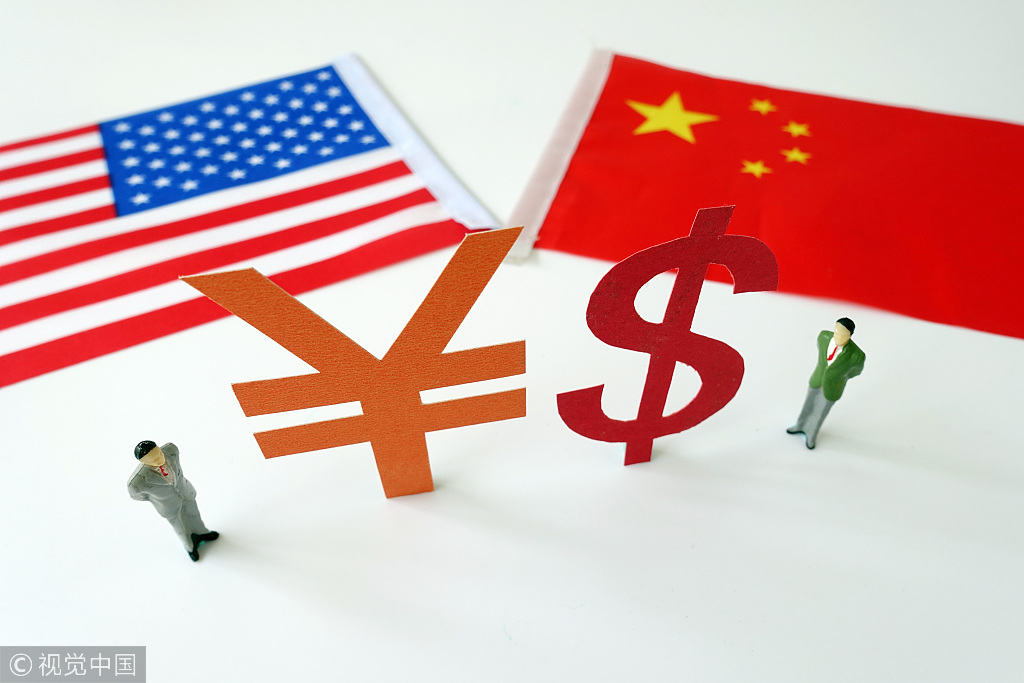
In the past 40 years, the world has seen the end of the Cold War and the emergence of the United States as the sole superpower, prompting it to assume the global competition between political systems had ended without realizing that these changes have been accompanied or followed by multi-polarization and globalization.
More important, global governance has been evolving from a Western undertaking into one featuring increasing East-West collaboration, especially between China and the West. And as President Xi Jinping has said, being a socialist developing nation, China will “resolutely safeguard national sovereignty, security, development interests, actively participate in and lead global governance reform, (and) forge a more complete global network of partnership”, making a great contribution to the “New Era”.
Trump’s strategic intention is clear
China, however, also faces unusual difficulties and resistance. Although cooperation has been the mainstream in Sino-US relations, marred by frictions, since the two sides established diplomatic ties nearly four decades ago, the US’ China strategy has gradually changed from “strategic ambiguity” (not viewing China as a friend or an enemy) to one of “strategic clarity”. That US President Donald Trump has identified China as a main strategic rival makes clear his intention to contain China’s rise.
The shift in China-US ties coincides with the new phase of “great development, great change, and great adjustment” in the global context, with the international environment getting more complicated and uncertainties growing.
First, wrangling over globalization has escalated, populism and protectionism are rising in the US and many other Western societies, and more trade frictions will follow. These developments seriously affect global economic connectivity and coordinated development, restrict the resolution of global issues, and make global governance more difficult. The widening wealth gaps between and within economies, and the continuous imbalance between market efficiency and social fairness have become a main driver of “anti-globalization”.
Second, differences over international rules have increased, the relatively balanced world order is breaking, and “disorder” and “fragmentation” are increasingly undermining global governance. With his “America First” policy, Trump is unwilling to continue providing global public goods, and trying to remake international rules to continue US hegemony. As such, the US has become a “revisionist” force, and the biggest variable in international relations.
Third, geopolitics has become even more complex, major-country relations are tense, and cooperation is ebbing. US-Russia confrontation is intensifying, the Middle East is in chaos and world energy supplies are fluctuating. And despite Trump’s meeting with Kim Jong-un, top leader of the Democratic People’s Republic of Korea, the future remains full of uncertainties, with the competition to gain the upper hand in cyberspace and polar regions rising. Besides, the US’ continued attempts to ignite a trade war with China are raising fears that the two may ultimately fall into the “Thucydides’ trap”.
Four, the world faces the difficult choice between conflict and integration of civilizations. But the US-led West believes in a conflict of civilizations, and Western societies in general consider their ideologies and systems to be the best in the world. In fact, the West’s tireless efforts to promote liberal Western democracies and attribute all contradictions to the “conflict of civilizations” are the root cause of various geopolitical problems.
Many in US mistakenly see China as a threat
The China-US trade disputes appear to be the beginning of major-country competition. China’s GDP now accounts for 15 percent of the world total, with the achievements of four decades of reform and opening-up reflecting the vigor and dynamism of the Chinese economy. But many in the US have mistaken China’s political stability and growing military as a threat because of their Cold War mindset and thus resorted to measures to contain China’s rise.
Former Trump adviser Steve Bannon said the report of the 19th National Congress of the Communist Party of China is actually a plan for global dominance in the next few years, and warned that the Made in China 2025 program will enable China to control global manufacturing. He also said the Belt and Road Initiative facilitates China’s geopolitical expansionism, Chinese 5G aspirations will help it to dominate technology, and the broader use of the yuan will deprive the US dollar of its status as a reserve currency. Such remarks expose Americans’ zero-sum game thinking and misunderstanding of China’s goals.
The US has triggered the trade dispute with China ostensibly to strike a balance in bilateral trade, but the real reason is to use a trade war to contain China’s economic and technological development in the same way it contained Japan in the last century. But the US should know a trade war will not resolve its systemic, structural contradictions or the issue of division of labor in the global value chain.
A trade war is the first step of a geopolitical containment policy, but will ultimately lead to a fierce confrontation between the existing hegemonic power and a rising power over the world order and international rules. So it is unrealistic to assume everything will be fine after the issue of trade deficit is resolved.
Strategic orientation of Sino-US relations
Despite repeated consultations and China’s restraint, the US seems hellbent on instigating a full-fledged trade war and expanding it to bilateral investments, intellectual property, strategic industries, the Belt and Road Initiative, the South China Sea issue, the Taiwan question, and the internationalization of the yuan. Why?
An analysis of the orientation of US-China relations from the strategic and historical perspective will make things clearer. As Laotzu said, the future has come before the past is gone. So the changing China-US relationship will be accompanied by various uncertainties and risks.
Will China-US friction lead to a new “Cold War” featuring all-round confrontation? Such a concern is not totally groundless. While striving for the best outcomes, China should prepare to deal with the worst-case scenario while engaging in active communication and in-depth consultation. The “unknown” and “uncertain” have actually provided an opportunity for exploring the two countries’ common grounds, which could help them adjust their respective policies, so as to create a “win-win”, rather than “lose-lose”, situation.
But if the US insists on containing China, the chances of the two sides falling into the “Thucydides’ trap” will increase. The US knows this very well. So why is it pushing bilateral ties toward confrontation? It is doing so mainly because it feels China’s strategic orientation doesn’t conform to its expectations.
Non-realization of expectations irks US
The US supported China in its reform and opening-up efforts and in joining the World Trade Organization in the hope of making China gradually embrace Western values. US leaders expected reform and opening-up to facilitate political openness, leading to China accepting the US-brand of “democracy”.
That China has blazed a different trail has made the US realize it overestimated its capability to lead China’s strategic orientation. And the success of the “Chinese model”, which offers other developing countries an option different from the “American model” for economic development, has made the US blind to China’s remarkable contributions to the world and US economies. Instead, it sees China’s development as an attempt to grab global dominance from the US.
An article in the National Interest magazine, titled “America vs. Russia and China: Welcome to Cold War II” analyzed the possibility of a “Second Cold War” from the perspectives of politics, diplomacy, military and economy, reflecting the opinions of many American elites. In recent years, the term “New Cold War” has been used to describe worsening US-Russia relations. Now it is also being applied to China-US ties. Only a serious analysis can reveal what it really means for the two countries and the world.
The US faces difficult choices at home and abroad, as many in the US believe their country will pay a very high price for an all-out confrontation with China. And according to PricewaterhouseCoopers’ estimate, in terms of purchasing power parity, China’s GDP will reach $58.5 trillion by 2050 while the US’ will be $34.1 trillion. This somewhat explains the US’ actions.
Still, proper and in-depth communication can prevent a China-US “Cold War”. After all, economic interdependence has built a global community of shared interests, and there can be no winner in a trade or any other war.
Therefore, the US needs to abandon its Cold War era approach and, instead, try to build a geopolitical model of peaceful co-existence, which philosopher John Gray proposed as a means of dealing with major-country relations, especially China-US relations. Also, the US need not worry about a “Beijing consensus” replacing the “Washington consensus”, because once countries start building a community of shared interests, globalization, multi-polarity, and pluralism will become the dominant trend.
| China Daily |
US jobs, economy to be hurt by trade war
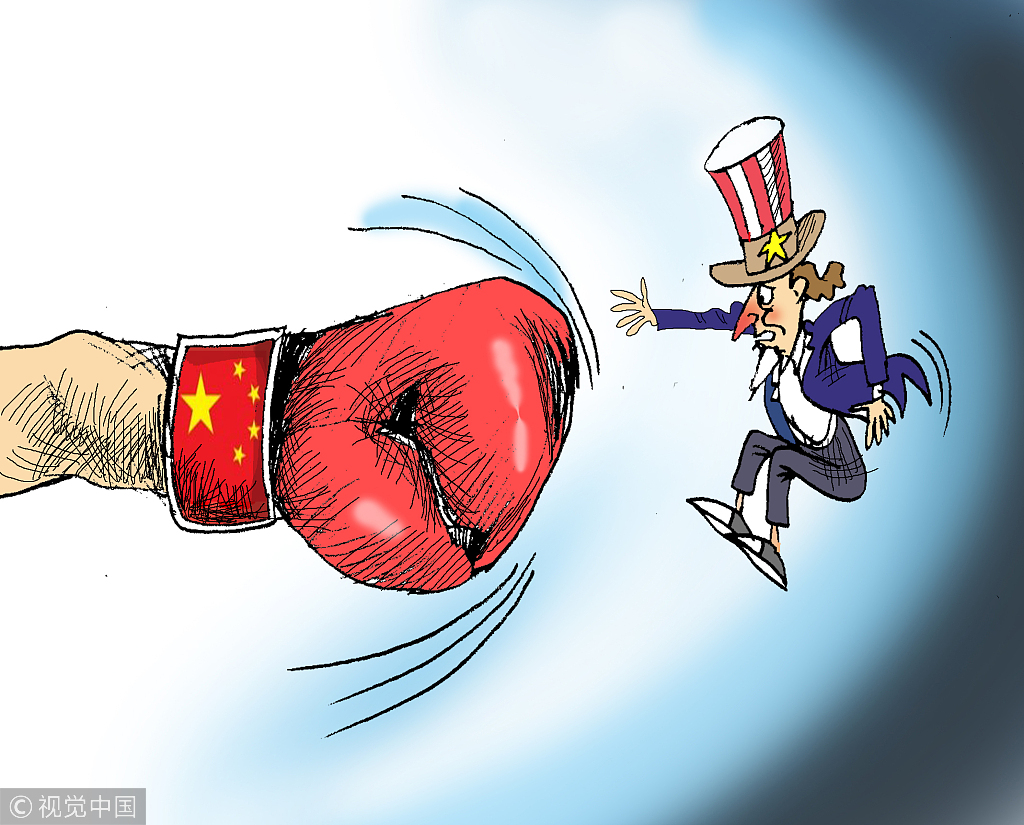
US experts have voiced deep concerns over the administration of US President Donald Trump’s trade war against China, a war that they say violates WTO rules and will hurt US jobs and the nation’s economy.
Trump fired the first shot on Friday by imposing punitive tariffs on $34 billion in imports from China. China quickly retaliated by levying tariffs on the same amount.
Gary Hufbauer, a nonresident senior fellow at the Peterson Institute for International Economics and deputy assistant secretary for international trade and investment policy at the US Treasury from 1977 to 1979, said “‘bully’ is the correct description” of what Trump has been doing to China, Canada, Mexico and other US trade partners.
Before levying tariffs on China, the Trump administration had imposed new tariffs on steel and aluminum in the name of national security, triggering retaliation from US trade partners as well as their complaints filed with the World Trade Organization. On Friday, China also lodged a WTO complaint against the latest US tariffs.
“Unfortunately, at the moment there is no effective domestic backlash to the destruction that Trump is wreaking on the international economic order,” said Hufbauer, adding that most people in the US and many lawmakers are not familiar with WTO rules.
Trump has repeatedly accused the WTO of treating the US unfairly and has reportedly threatened to withdraw from the international trade body.
Wayne Morrison, a trade and finance specialist at the Congressional Research Service, said there is great concern among US trade experts that Trump’s unilateral action will undermine the global trading system that the US helped build.
Henry Levine, a senior adviser at the Albright Stonebridge Group and a former deputy assistant secretary of commerce for Asia in the administration of former US president George W. Bush, said Trump’s decision to go forward with tariffs on Chinese goods reflects two of his deeply held beliefs: that trade is a zero-sum game and that other countries have been taking advantage of the US for decades with their trade surplus.
“You can see these two perspectives not only in the tariffs imposed on Chinese goods, but also in tariffs imposed on products from US friends and allies,” he said.
Economists and trade experts have disagreed with Trump’s interpretation of the cause and benefit of the trade imbalance. They believe that the US trade deficit is caused primarily by its fiscal policy, the low saving rate and the role of the US dollar as a global reserve currency.
“Trump is ignoring the pleas of the business community. He seems to be betting that his get-tough approach against China will make his political base happy, even though these policies will hurt many of them in the long run,” Morrison said.
“A trade war would be very costly to both economies and the global economy as a whole,” he added.
A study led by Mary Lovely at the Peterson Institute showed Trump’s latest tariffs on China will hit non-Chinese supply chains even harder. Many of Chinese exports to the US come from foreign companies operating in China.
Edward Alden, a senior fellow at the Council on Foreign Relations, said the only way for the Trump administration to change course is as a result of domestic political pressure.
“My hope is that then there will be a period of reflection in which all the countries involved will find a way to come back to the negotiating table,” he said.
“I still believe there is time to prevent this trade war from further escalation, but we are in a dangerous period,” Alden said.
On Friday, the Office of the US Trade Representative announced guidance for companies on how to apply for exclusion from the newly imposed tariffs on products made in China. Companies will have 90 days to file the requests.
“The real intention of the Trump administration is to deter China while minimizing the negative impact on its electorate,” said Mei Xinyu, a researcher with the International Trade and Economic Cooperation Institute of the Ministry of Commerce.
“In fact, even if a certain number of US companies obtained exclusions from the additional tariffs, it would not relieve the pressure on its overall economy. High costs imposed on Chinese goods would eventually be passed on to US consumers,” said Li Yong, deputy director of China Association of International Trade Expert Committee.
| China Daily |
Ministry: US tariffs set to backfire
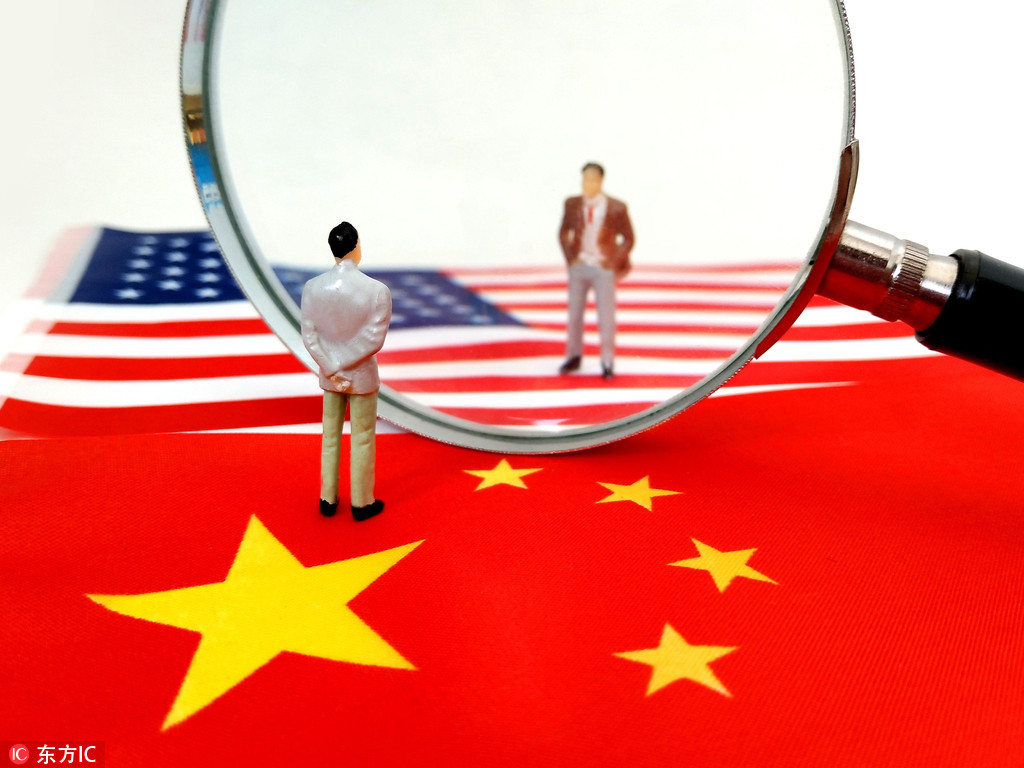
The threatened tariffs on goods from China will backfire on the United States if they take effect on July 6, the Chinese Ministry of Commerce said on Thursday.
Ministry spokesman Gao Feng said about 59 percent of the $34 billion imports subject to US tariffs are produced by foreign-invested enterprises in China.
“If the list takes effect, the US will actually impose tariffs on both Chinese and foreign companies, including US ones,” Gao said. “The US is firing at not only the world, but also itself.”
Gao reiterated China is not eager to engage in a trade war, but will do so to firmly defend the interests of the country and its people.
The General Administration of Customs said on the same day China will levy tariffs on US goods, as soon as US’ tariffs are in force.
By Jing Shuiyu and Ren Xiaojin | chinadaily.com.cn | Updated: 2018-07-05 10:42
Hainan allows private firms to develop islands
South China’s island province of Hainan issued a regulation on Wednesday laying out how uninhabited islands should be developed.
A document issued by the provincial ocean and fishery authorities states any entity or individual wanting to develop uninhabited islands should first submit application and development plans to the ocean administration authorities.
Development should be carried out according to regulations and laws on size and intensity of exploitation, construction of buildings and island protection.
During the approval process, one priority should be whether the plan gives due consideration to protecting island and ocean environments, as well as natural and cultural landscapes in the development of islands, the regulation reads.
The regulation sets an upper limit of duration at 15 years for cultivation purposes, 25 years for tourism and entertainment, 30 years for salt and mining industries, and 40 years for public welfare purposes.
By Ma Chi | chinadaily.com.cn | Updated: 2018-07-05 10:10
Gobi offers fine climate for wineries in Xinjiang
Wineries in the Xinjiang Uygur autonomous region are helping to bring agriculture to the Gobi Desert and boost the local economy.
Yanqi Hui autonomous county, a major wine-producing area, sits on the southern slope of the Tianshan Mountains. The mountains interrupt the eastward flow of humid air that originates as far away as the Atlantic Ocean. By the time it reaches Xinjiang the moisture is reduced considerably, and the mountains’ northern slope blocks most of the final remnants, leaving the southern side arid. This creates a friendly environment for grapes.
Despite getting more than 3,600 hours of daylight a year, the dry weather and raging sandstorms have hampered the county’s farming industry.
Yet winemakers have spotted potential in the endless desert and installed drip irrigation systems.
“In 20 years, we have transformed the boundless Gobi Desert into a sea of grapes,” said Zou Jiyun, CEO of Xinjiang Xiangdu Winery, which was founded in 2002. Its vineyards now cover 2,700 hectares.
“The soil conditions and local weather conditions, including the low rainfall, have kept diseases and pests away from the grapes, thus reducing the use of pesticides,” he said.
The vast vineyards have helped conserve the environment, while providing job opportunities and boosting the local economy, Zou said.
“At the peak of production, we employ more than 500 workers a day. Since we started, we’ve also paid more than 200 million yuan ($30 million) in taxes.”
Yanqi began to foster wineries in 1998. In 2009, the wine industry was included in the local government’s economic development plan and has been supported by multiple policies.
Qi Hongshen, a manager at Tiansai Vineyards, said the county government began investing heavily in a wine industry park almost 20 years ago that incorporates functions of grape-planting, winemaking and tourism.
“The government has introduced favorable policies for winemakers in terms of acquiring land, water and electricity,” she said.
China has a long tradition of consuming alcohol, yet Zou said that as people become more conscious of their health, more will turn to wine for its health benefits. Many already have a growing appreciation of wine culture, he said.
“The Chinese began to make wines thousands of years ago, but for some reason it didn’t have the same appeal as other liquors. As people become wealthier and more conscious of the health aspects of the things they consume, the industry is bound to become lucrative,” he added.
By Li Lei in Korla, Xinjiang | China Daily | Updated: 2018-07-04 10:13
Tariffs’ toll hits each state: study
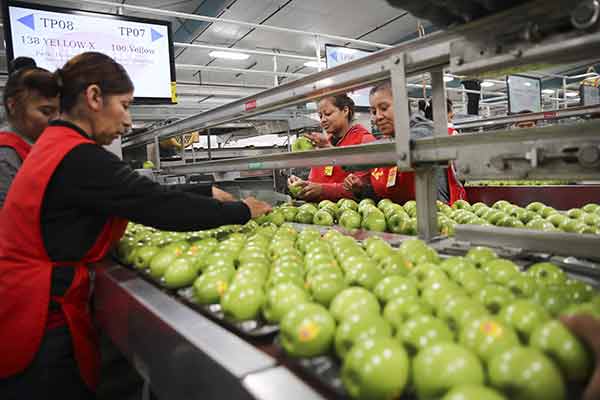
Texas, a state where at least 3.15 million jobs are supported by global trade, will see $3.9 billion in exports — including sorghum and cotton to China, meat products to Mexico and iron and steel to Canada — threatened by the emerging trade war.
Another state, South Carolina, will see $3 billion in exports subject to retaliatory tariffs, with lawn mowers and steel and iron products the hardest-hit.
The estimates are from a new analysis the US Chamber of Commerce released on Monday in protest of the Trump administration’s handling of trade disputes by escalating tariffs, which the chamber argues is “the wrong approach” as it risks derailing the US economy and sparking a global trade war.
Using official data from relevant governments, the largest business lobby group in the US outlines the state-by-state impact of retaliatory tariffs from China, the European Union, Mexico, and Canada, which have been imposed in response to new US tariffs on imported goods.
The report comes during a critical week, as the US is set to slap tariffs on $34 billion worth of additional goods from China on Friday. In response, China has vowed to retaliate in kind with its own tariffs on US products, mostly soybeans and other farm produce.
In all, about $75 billion worth of US exports will be subject to retaliatory tariffs as of this week, the chamber said in a statement.
“Tariffs are beginning to take a toll on American businesses, workers, farmers, and consumers as overseas markets close to American-made products and prices increase here at home,” said chamber president Thomas J. Donohue.
“Tariffs are simply taxes that raise prices for everyone. Tariffs that beget tariffs that beget more tariffs only lead to a trade war that will cost American jobs and economic growth,” he said.
With President Donald Trump defiantly standing by his tariffs, analysts said the impact of the unprecedented campaign launched by the top lobbying group, though traditionally an ally of Trump’s Republican Party, could be limited.
Yun Sun, co-director of the East Asia Program at the Stimson Center, a think tank in Washington, said the chamber’s action was prompted by the proximity of the tariffs to be imposed, the strong reaction from US trading partners, including Canada and the EU, as well as stock markets’ and businesses’ reaction to the looming trade war.
However, the campaign “may not influence Trump’s determination to levy the tariffs”, Sun said.
Douglas H. Paal, vice-president of the Asia program at the Carnegie Endowment for International Peace, said the chamber’s drive is a “worthy and necessary” effort.
“But I doubt it will have an immediate effect. Maybe after Trump’s tariffs come up short and fail to deliver results, the campaign will register with policy makers,” Paal told China Daily.
Euijin Jung, a research analyst with the Peterson Institute for International Economics in Washington, said the chamber’s campaign may serve to generate pressure in some key states.
The group’s analysis of the harm each US state could suffer from retaliation by US trading partners, including potential job losses caused by a trade war, is likely to draw the attention of business people and farmers in Republican states, where Trump’s protectionism agenda was popular during his presidential campaign.
“A timely planned campaign of the US chamber would generate a good amount of pressure on Congress and Trump,” Jung said.
Earlier, analysts assumed that the only way Trump would change his approach was if there was a major drop in the stock market or economy.
On Monday, US Commerce Secretary Wilbur Ross said President Trump would not shift his trade policies based on stock market fluctuations.
Wall Street ended higher on Monday after a choppy session, with gains by Apple and other technology stocks offsetting worries about an escalating trade war between Washington and its trading partners, Reuters reported.
“There’s no bright line level of the stock market that’s going to change policy,” Ross told CNBC.
Also on Monday, during a meeting with Dutch Prime Minister Mark Rutte at the White House, Trump said the World Trade Organization has treated the US “very badly, and I hope they change their ways”.
Asked if the US would quit the WTO, the president said he wasn’t “planning anything now”, but if the WTO doesn’t treat the US properly, “we will be doing something,” according to a White House press release.
By Zhao Huanxin in Washington | chinadaily.com.cn |
ADM Announces Proposed Acquisition of Neovia, Establishing a Premier Global Leader in Value-Added Animal Nutrition Solutions
CHICAGO–(BUSINESS WIRE)– Archer Daniels Midland Company (NYSE: ADM) announced today that it has agreed to terms granting exclusivity in discussions to purchase Neovia, a global provider of value-added animal nutrition solutions, with 72 production facilities and a presence in 25 countries, headquartered in Saint-Nolff, Britanny, France. The 100 percent cash deal has an approximate enterprise value of €1.535 billion, subject to customary adjustments.
“The acquisition of global leader Neovia would represent a transformative step for our Animal Nutrition business, and a major strategic investment in France,” said ADM Chairman and CEO Juan Luciano. “At ADM, everything starts with the farmer, and we are eager to deepen our relationships with French farmers and French agriculture as we bring together the resources, technologies and expertise of two great companies. We look forward to working with them to leverage their global presence, integrated value chain and world-class innovation to reach new markets and new customers together.
“The acquisition of Neovia would be a major step as we continue to execute the value creation strategy we first outlined in 2014,” Luciano continued. “Neovia is a major global provider of animal nutrition solutions, with significant operations in Western Europe, South and Central America, and Southeast Asia. Combining Neovia’s global presence and product and innovation expertise with our own growing Animal Nutrition footprint and capabilities would create one of the world’s leading animal nutrition providers, capable of offering complete solutions for customers around the globe—and would be the ideal platform for future growth.”
Founded in France in 1954, Neovia manufactures and sells a wide range of nutrition solutions for the feed industry, operating in business lines including premix and value-added services, pet care, additives and ingredients, aquaculture and complete feed. The company, which is currently majority owned by leading French agricultural cooperative group InVivo, has about 8,200 employees. It has extensive innovation capabilities, with 11 R&D centers in six countries. It had global sales of €1.7bn in 2017, and, with very limited presence in the United States and more than 75 percent of its sales coming from outside Western Europe, the company’s footprint complements ADM’s.
“This transaction is a great opportunity for both Neovia and ADM to establish what will be a global leader in animal nutrition solutions. ADM will pursue partnerships with French cooperatives and reinforce its relationships with the French agricultural world. At the same time and in line with our strategy ‘2025 by InVivo’, the sale of Neovia will enable us to accelerate our transformation by favoring investments in our growth levers: agriculture, agribusiness & wine, and retail & digital, in France and abroad,” declared Thierry Blandinières, CEO of InVivo.
“This is an important addition, not only for our animal nutrition business, but for our entire integrated Nutrition platform,” said Vince Macciocchi, ADM’s senior vice president and president, Nutrition. “In recent years, health and wellness trends in human nutrition—such as clean-label, natural ingredients, and innovative solutions—are being echoed in animal nutrition. With Neovia, we will have global capabilities that span human and animal nutrition, expanding our reach and enhancing internal efficiencies. From colors and flavors to enzymes and bioactives, our new integrated nutrition platform will offer an unparalleled array of ingredients and solutions to meet customer needs.”
Over the last four years, ADM has undertaken the most extensive portfolio transformation in its 115-year history, moving closer to end customers by adding capabilities in specialty and value-added products and services. In its Animal Nutrition business, ADM has added premix and aquaculture capabilities in Asia; built new, modern facilities in North America; and moved into pet treats in 2017. Earlier this year, ADM combined its human and animal nutrition businesses into a single business unit that offers complete nutrition solutions.
Under French law, the signing of an acquisition agreement is contingent upon informing and consulting with relevant employee representative bodies. Subject to that process and regulatory approvals, the acquisition is expected to close by the fourth quarter.
Lazard is acting as financial adviser to ADM. Baker McKenzie is acting as legal advisor.
Investor Call
ADM will host a conference call and audio webcast today, July 2, at 8:00 a.m. U.S. Central time. A slide presentation will be available to download prior to the call. To listen to the call or to download the slide presentation, go to www.adm.com/webcast.
Replay of the call will be available for an extended period of time at www.adm.com/webcast.
Forward-Looking Statements
Some of the above statements constitute forward-looking statements. ADM’s filings with the SEC provide detailed information on such statements and risks, and should be consulted along with this release. To the extent permitted under applicable law, ADM assumes no obligation to update any forward-looking statements.
About Neovia
Neovia is a leading international player in animal nutrition. It has several complementary business lines, including: premixes and value-added services, including premium and super-premium pet food; animal feed additives; nutritional and farming solutions for aquaculture; complete food for livestock and horses; and analysis and field support. The company is headquartered in Saint-Nolff, France, and employs around 8,200 people across 25 countries.
About ADM
For more than a century, the people of Archer Daniels Midland Company (NYSE: ADM) have transformed crops into products that serve the vital needs of a growing world. Today, we’re one of the world’s largest agricultural processors and food ingredient providers, with approximately 31,000 employees serving customers in more than 170 countries. With a global value chain that includes approximately 500 crop procurement locations, 270 ingredient manufacturing facilities, 44 innovation centers and the world’s premier crop transportation network, we connect the harvest to the home, making products for food, animal feed, industrial and energy uses. Learn more at www.adm.com
Article Source:ADM
US farm exports to China may plummet

Trade frictions between China and the United States could result in US exports of certain agricultural products to China dropping by as much as 50 percent, according to a Chinese Academy of Agricultural Sciences report.
Levying additional tariffs on each others’ goods will have a big effect on US agriculture — the value of US farm exports to China may be reduced by about 40 percent in total, and by about 50 percent for soybeans, cotton, beef and mutton, the report said.
Additional tariffs also would slightly push up the cost of imported agricultural products in China, with the overall price of imported soybeans expected to increase by 5.88 percent, and for cotton, 7.53 percent. Increases in other agricultural products will be small, according to the report released late Tuesday.
Zhang Yumei, a researcher at the academy’s Institute of Agricultural Economics and Development and an author of the report, said estimates were made on the premise that major factors affecting soybean production and trade in China and China’s major trade partners remain unchanged.
“The actual impact of trade frictions between China and the US on China’s imports of agricultural products from the US is affected by many factors, such as the change in trade policies, stocks of agricultural products in the US and production in other countries.”
In the long term, China can eliminate negative effects on agricultural imports caused by additional tariffs from the US by measures such as diversifying its import sources, increasing trade with countries involved in the Belt and Road Initiative and increasing domestic cultivation, she said.
However, “resolving trade disputes through negotiations is still a win-win measure,” the report said.
China announced on June 16 that it would levy an additional 25 percent tariff on 659 goods worth $50 billion from the US, including agricultural products such as soybeans, pork, beef and certain kinds of vegetables and fruits in response to US plans to impose tariffs on $50 billion in Chinese goods.
The tariff will cause a price increase of 25 percent for some agricultural products imported from the US, including soybeans, a major agricultural product in the US, Zhou Xiangyang, an assistant researcher in agricultural economics at CAAS, said.
About 60 percent of all soybeans exported by the US go to China, he said.
“This will result in a decline of soybeans imported from the US by China, and China may turn to other countries, such as those in the Belt and Road Initiative, for substitution and reduction of risks.”
Agricultural authorities in China also have been encouraging farmers to increase cultivation of soybeans, and this will help narrow the supply gap, he said.
China is the world’s biggest importer of agricultural products, and more imports from emerging countries are expected to prevent risks, according to the Ministry of Agriculture and Rural Affairs.
By WANG XIAODONG | China Daily | Updated: 2018-06-28
Alaskan seafood could get snared in tariff net
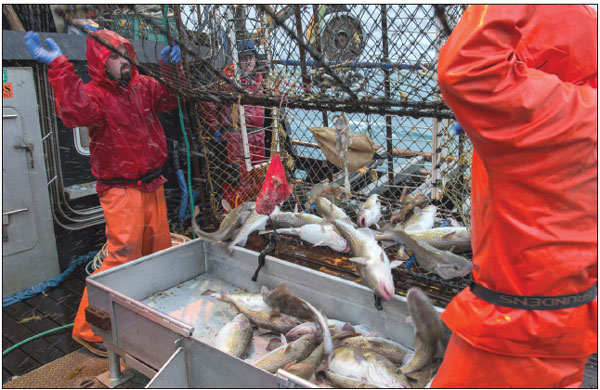
Alaska’s seafood exporters are concerned about the impact new tariffs from China could have on their industry.
After the US last week released a list of goods on which it will place 25 percent tariffs, China reciprocated on American goods, including Alaskan seafood.
The tariffs will go into effect on July 6. The new 25 percent tariff would be on top of current ones that vary from 5 to 15 percent.
Alaska exported 40,000 tons of salmon to China last year. Other Alaskan products on the list that appear to be impacted include geoduck, sea cucumber, frozen salmon, pollock, Pacific cod and sole.
“We are still waiting to gain more details — a full product list and product specific classifications. Initial indications are that products exported to China for reprocessing and re-export (to other countries) may be exempt from this new tariff,” Alexa Tonkovich, executive director of the Alaska Seafood Marketing Institute (ASMI), told China Daily.
“China is a major reprocessing center for Alaska seafood, so how these tariffs are applied has a major impact. Either way, many Alaska seafood products for domestic consumption in China would be subject to the new tariff,” she said.
ASMI has been promoting Alaskan seafood in China for more than 20 years.
“Alaska seafood companies have also invested in the market and have many Chinese partnerships,” Tonkovich said.
More than 10 major e-commerce platforms in China, including tmall.com, promote Alaska seafood during the commercial fishing season.
Last year, in addition to salmon, king/snow crab, black cod, halibut, cod, sea cucumber and yellowfin sole, new products and deep-processed/ready-to-eat products such as pollock roe, pollock hamburger and nuggets were sold on tmall during the promotion. The sales were triple those during the non-promotion period and hit 90,000 kilograms.
“We are deeply disappointed in these retaliatory tariffs. There is no connection between the products targeted by the US and the tariffs Beijing plans to impose on exported American seafood,” John Connelly, president of the National Fisheries Institute, said in a statement.
“It is Maine lobstermen, the men and women on boats in Alaska, and families harvesting and processing seafood in the Pacific Northwest who will feel the brunt of the Administration’s misguided policy. It is not clear where these trade actions will ultimately lead; what is clear is that they will negatively impact American seafood jobs,” he said.
Based on the data from the McDowell Group for ASMI, more than 21,200 rural Alaska residents were directly employed by the industry in 2015.
Major seafood processors that could be affected include Trident, Peter Pan, North Pacific and Alaska General.
In March, Alaska Governor Bill Walker announced a major initiative to build on the economic relationship between Alaska and China and led a 12-day trade mission to China in May.
Fifty representatives from 30 companies in Alaska, from sectors including fisheries, tourism and investment, had participated in business-to-government and business-to-business meetings, networking opportunities, events and market briefings to promote Alaskan business opportunities in China.
Since 2011, China has been the top consumer of Alaskan goods. In 2017, Alaska exported $1.32 billion worth of goods, including $796.2 million in seafood and $64.6 million in fishmeal, employing thousands of fishermen in Alaska. The state also exported $355.8 million in mineral ore, $49 million in energy, and $48 million and $5.9 million in forest products and machinery, respectively.
Jeff Welbourn, senior director of Trident Seafoods Corp’s China office, told China Daily that his company, one of the largest seafood harvesters and processors in North America, is making its biggest investment since it was founded in 1973 in infrastructure to accommodate the Chinese market.
“Alaska has abundant resources, from natural gas and seafood to beer and baby food. These resources enable our state to dramatically reduce the trade deficit between the United States and China, if we can finalize agreements to increase exports of our products,” Walker said Monday in a statement related to the tariffs.
“Trade negotiations between leaders from both countries are ongoing. I am confident that we will, in the end, embrace the opportunity for mutual economic growth that we can achieve by working together,” he said.
Chinadaily.com
Loan criteria eased for small businesses
Government will ensure sufficient liquidity, sound economic growth
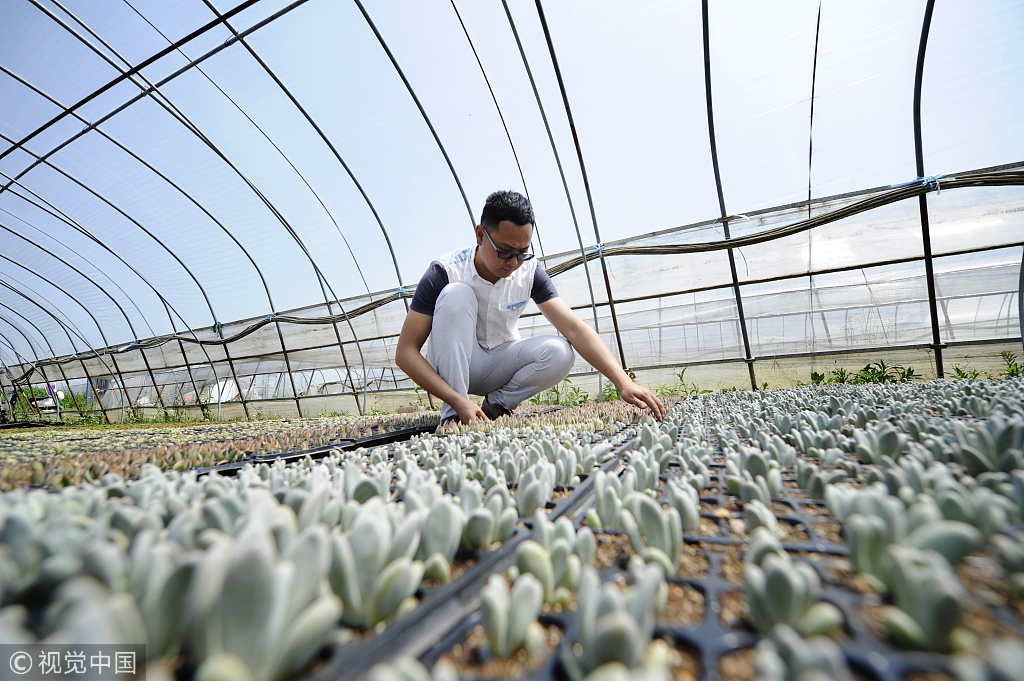
The central government will roll out a series of incentives to make financing more accessible and affordable for small and micro businesses to promote cost-cutting in the real economy, the State Council’s executive meeting chaired by Premier Li Keqiang decided on Wednesday.
It was pointed out at the meeting that China will maintain its current prudent and neutral monetary policy. The government will work to keep liquidity sufficient and appropriate to maintain financial stability, strengthen policy coordination to boost market confidence and ensure the economy performs within a reasonable range.
A series of fiscal, tax and financial incentives will be put in place to help small and micro businesses with financing. The central bank will work with commercial banks to ease lending conditions for small and micro businesses. Evaluation criteria for financial institutions will be improved to ensure that businesses with a credit quota of up to 10 million yuan ($1.55 million) will enjoy faster loan growth year-on-year than other types of credit recipients.
From September 1 this year to the end of 2020, the credit quota for small and micro businesses with loans that are eligible for VAT exemptions on interest revenues will be raised from 1 million to 5 million yuan. Meanwhile, the State financing guarantee fund will cover no less than 80 percent of the financing guarantee for small and micro businesses.
Monetary tools will be applied to raise credit support for small and micro businesses. Targeted cuts in banks’ reserve requirement ratios and other monetary policy tools will be used to boost credit supply to small and micro businesses. Also, loans of businesses with credit quotas of less than 5 million yuan can be included as qualified collateral for midterm lending facility, easing their ability to borrow.
“The issue of a lack of affordable financing for small and micro businesses must be taken seriously,” Li said, “The mentality that big banks can only serve big businesses must be rejected. Financial services for small businesses and individuals must be improved.”
This is the third time since the new government took office in March that the State Council put lowering small and micro businesses’ financing costs on the agenda of a weekly executive meeting.
“Small and micro businesses are leading job providers, and many of them have strong potential for growth. Their robust development will help achieve high-quality growth and improve people’s well-being,” Li said.
By ZHANG YUE | China Daily


