
Việt Nam, UK to boost coffee trade
September, 23/2016 – 15:44
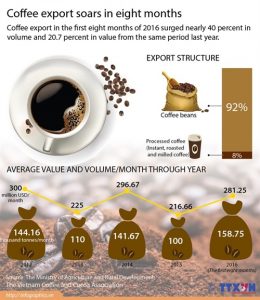
LONDON – Vietnamese and British coffee enterprises are keen on doing more business together, Việt Nam Coffee and Cocoa Association (VICOFA) Chairman Lương Văn Tự said on Wednesday.
Tự was speaking to a Vietnam News Agency correspondent at a roundtable discussion on the coffee business in London.
The seminar, jointly held by VICOFA, British Coffee Association and the Embassy of Việt Nam in the United Kingdom, aims to boost coffee trade between the two countries.
Participants discussed measures to develop and promote coffee production standards in line with the principles of sustainable development. They also talked about the quality of coffee and how export supply chains are organised in producing countries such as Việt Nam.
At the seminar, Vietnamese Ambassador to the UK Nguyễn Văn Thảo pledged his strong support to facilitate Vietnamese market access to UK enterprises. Deputy Minister of Agriculture and Rural Development Lê Quốc Doanh said Việt Nam encouraged foreign investors to pour capital into agriculture, including the coffee processing technology.
Việt Nam is the largest coffee producer in Asia and second in the world after Brazil.
Every year, Việt Nam exports 90 per cent of what it produces with a volume of some 1.3 million tonnes, earning over US$3 billion. In recent years, Việt Nam has increased the export of processed coffee — roasted, ground and 3 in 1.
The Vietnamese coffee industry is focusing more on processing instant coffee, which generates higher profits for the national coffee sector.
Domestic consumption is also increasing rapidly. In 2015, Việt Nam had 17,300 coffee shops nationwide. There are several coffee shop chains in the country, such as Highland Coffee, Trung Nguyên, Mê Trang and Vinacafe. The Starbucks chain has developed at a very rapid pace in Việt Nam.
In 2015, bilateral trade turnover between the United Kingdom and Việt Nam reached $5.4 billion, an increase of 25 per cent against the previous year. The United Kingdom’s investment in Việt Nam was valued at $4.7 billion, ranking second among European Union investors.
Việt Nam export turnover to the United Kingdom has been increasing at an average of 20 per cent per year. The main export products include seafood, vegetable, fruits and cashew, as well as coffee, tea, pepper and rubber, along with garments, textiles and shoes. In terms of coffee, the United Kingdom is among the top 10 largest coffee importing markets of Việt Nam. In 2015, the United Kingdom imported some 32,000 tonnes worth $65million.
Coffee exports exceed expectations
Việt Nam’s coffee exports in August reached 2.54 million bags (152,678 tonnes), a growth of 9.2 per cent from July, according to the General Department of Customs’ statistics.
This number is significantly higher than the market’s expectation of 100,000 to 120,000 tonnes, as well as the Government’s estimated 140,000 tonnes.
Việt Nam’s coffee exports from the beginning of the 2015-16 crop has yielded 1.61 billion tonnes, as of today, an increase of 33 per cent compared with the same period last year.
Experts said Việt Nam’s increase in coffee exports in August has contributed to balancing the market in the context of decreasing supply from Brazil, one of the largest coffee producers in the world.
According to the August 2016 monthly exports report by the Brazilian Coffee Exporters Council (Cecafe), the country’s export of Robusta coffee in August had declined by 90 per cent compared with the same period last year to a mere 39,327 60kg bags.
Brazil’s yield of Robusta coffee was severely affected by the drought in the state of Espirito Santo – Brazil’s main Robusta-producing region. Its coffee exports (both Arabica and Robusta) in August reached 2.4 million bags, down by 7.4 per cent from the same period last year.
Nonetheless, compared with July, coffee exports still increased by 46 per cent – the smallest amount in a year.
Nelson Carvalhaes, president of Cecafe, predicted a gradual and sustainable growth recovery for Brazil’s coffee exports. – VNS
Source: http://vietnamnews.vn/economy/
Food corporation faces huge losses
Vietnam Southern Food Corporation Limited (Vinafood 2), one of Vietnam’s two biggest food corporations, has racked up USD47.6 million in losses.
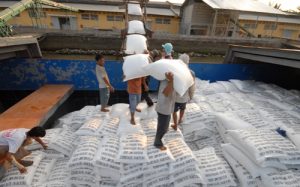
Vinafood 2 claimed its rice export value sharply dropping , which is partially attributed to the losses
Vinafood 2 has reported its operations to the Ministry of Agriculture and Rural Development, saying that it has faced losses for three consecutive years.
According to the report, the firm made a loss of VND268 billion (USD12.7 million) in 2013 and the figure was VND900 billion in 2014 and VND9 billion in 2015, raising its total losses to roughly VND1 trillion to date.
Regarding the losses, Vinafood 2 claimed it was due to its rice export value sharply dropping to USD546 million in 2015 from USD1.05 billion in 2012, which was attributed to the strong competition from Thailand and India. Vinafood also added that tighter credit policies of some banks had caused difficulties for the firm to access loans.
Meanwhile, its subsidiaries had posted ineffective operations, which was partially responsible for Vinafood’s debt. An Giang Food and Foodstuff Company made a loss of VND18 billion. Other subsidiaries such as Binh Dong flour plant; Dong Thap Food and Foodstuff Company; Bac Lieu Food and Foodstuff Company made losses of tens of billions of VND.
To help deal with the difficulties, Vinafood 2 has asked the government to remove the firm from the list of businesses being closely supervised for ineffective operations so that Vinafood 2 could access loans from banks more easily.
By the end of 2015, Vinafood 2 had incurred a total debt of more than VND7 trillion to banks with the majority being short-term loans.
Vinafood 2 is just one example among a range of Vietnam’s state-owned enterprises which operate ineffectively and have made gigantic losses.
Source: http://english.vietnamnet.vn/
Pouring money into agriculture: a gamble for Vietnamese tycoons
20/09/2016
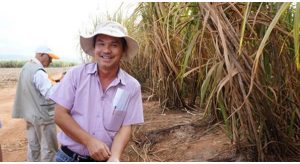
VietNamNet Bridge – Though they followed methodical production methods, many Vietnamese tycoons, who have succeeded in their core business fields, have harvested bitter fruit in the agricultural industry.
In 2015, Vingroup, Hoang Anh Gia Lai and Hoa Phat Groups, the three richest Vietnamese stock millionaires, surprised the public when announcing plans to pour money into agricultural production.
Hoang Anh Gia Lai’s owner decided to develop cow farms, while Hoa Phat’s owner makes animal feed and Vingroup is growing clean vegetables.
Other large conglomerates, including TH, Vinamilk (dairy producers) and T&T Group also have injected money into agriculture projects. Local newspapers commented that a new wave of investment in agriculture had started.
However, the movement seems to be fading. This is attributed to the huge debt of VND3 trillion incurred by Hoang Anh Gia Lai, which decided to give up real estate projects to focus on agriculture.
The group’s H1 finance report showed that its payable accounts had reached VND32.995 trillion, which included VND26.683 trillion in loans.
Hoang Anh Gia Lai is not alone. Nguyen Kim, a home appliance distribution chain, after pouring money into food companies in Mekong River Delta, has seen unsatisfactory business results.
Duc Long Gia Lai, another powerful conglomerate, stated that once the maize growing project brings high profit, it would join forces with Vinamilk to develop a project on breeding 80,000 milk cows and 45,000 meat cows. However, the project has remained on paper over the last two years.
Only Vingroup still works with with farmers in many projects. On September 1, Vingroup kicked off a program on supporting agriculture production under which it would invest VND300 billion a year to support 1,000 cooperatives and households to grow clean vegetables, distribute products and develop brands.
The need for high investment because of dependence on weather and the world’s price fluctuations partially explain the unsatisfactory business results of the projects.
This is also why investment capital into agriculture only accounts for one percent of the total investment in the national economy, according to the Ministry of Agriculture and Rural Development (MARD).
Meanwhile, according to the deputy director of MARD’s Planning Department Nguyen Thi Hong, there are two other problems: the small agricultural land fund and outdated technologies.
She said that Vietnam needs to change its thinking about production, especially in the context of influences from nature and climate change. Ninety percent of agricultural enterprises are ‘small’ or ‘tiny’.
There are 16.3 million farming households in Vietnam. It is estimated that each farmer has 1,150 square meters of land for cultivation.
Source: http://english.vietnamnet.vn
Vietnam shrimp sales to US rose
September 20, 2016
In Jan-Jul 2016, Vietnam shrimp exports to the U.S. reported the continuous growth except for the slight reduction of 1.5% in June; sales in Feb saw the sharpest growth of 52.3% from Feb 2015; sales in Jul saw the highest value in Jan-Jul 2016.
After the reduction in June, Vietnam’s shrimp sales to the U.S. in July rose by 29.4% to US$65.9 million. The figure in Jan-Jul this year reached US$364.8 million, up 16.3% year on year.
The U.S. remained the growth in importing shrimp from Vietnam thanks to its higher demand for shrimp while other suppliers to the U.S. like India, Indonesia, Ecuador, Thailand saw the decline in shrimp production, leading to the rise in export price. Demand for black tiger shrimp from the U.S. rose while the harvest production of this species in India and Indonesia fell. Currently, the restaurants and retailers in the U.S are launching trade promotion program in order to boost domestic consumers’ shrimp consumption.
Raising black tiger imports from Vietnam
In the early 2015, the U.S. tend to raise importing black tiger shrimp from Vietnam. In Jan-May 2015, the proportion of black tiger exported from Vietnam to the U.S. was 24% and 69% for white leg shrimp sales. In Jan-May 2016, the share of black tiger was 27% and 70% for white leg shrimp.
Through June 2016, shrimp imports into the U.S. reached 264,772 MT, worth by US$2.4 billion, down 1% in volume and 8% in value from the same period of last year. Indonesia took the lead with the share of 22.5%; followed by India and Thailand with 21.2% and 13.2%, respectively. Vietnam ranked the fourth with 12.2%.
Out of top 5 largest shrimp suppliers to the U.S.; only Vietnam raised volume of 9% and value of 1% of shrimp exported to the U.S. Shrimp exports from Ecuador to the U.S. reported the sharpest decline of 18% in volume and 17% in value. The U.S. tend to reduce importing from Ecuador and raised importing from Asian suppliers like Vietnam, India, Thailand, China because these suppliers can meet the U.S.’s demand of shrimp skewers with reasonable price.
Forecast
The U.S.’s economy showed many positive signs like lower unemployment rate, low gas price, boosting consumers’ spending. Demand for peeled shrimp of restaurant chains in the U.S. are surging. It is expected that shrimp demand for year-end festivals in the U.S. will continue to rise.
| Shrimp imports into the U.S., Jan-Jun 2016 | ||||||
| Suppliers | Volume (MT) | Value (thousand US$) | ||||
| Jan-Jun 2015 | Jan-Jun 2016 | Variations (%) | Jan-Jun 2015 | Jan-Jun 2016 | Variations (%) | |
| World | 268,068 | 264,772 | -1 | 2,624,109 | 2,402,108 | -8 |
| Indonesia | 59,045 | 58,509 | -1 | 599,237 | 542,566 | -9 |
| India | 55,225 | 54,126 | -2 | 551,291 | 511,615 | -7 |
| Thailand | 31,135 | 33,605 | 8 | 339,611 | 318,627 | -6 |
| Vietnam | 25,109 | 27,424 | 9 | 292,319 | 295,160 | 1 |
| Ecuador | 45,065 | 37,176 | -18 | 341,336 | 283,263 | -17 |
Source: seafood.vasep.com.vn
Fierce battle in dairy market anticipated
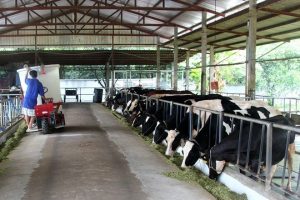
VietNamNet Bridge – The dairy market is expected to become hot as more free trade agreements (FTAs) take effect, bringing more foreign producers to the Vietnamese market.
Analysts say powdered milk is now a playing field for foreign producers, who hold 70 percent of the market share. The liquid milk market segment is led by Vinamilk, a Vietnamese producer which holds 50 percent of market share.
Pham Thi Kim Oanh, director of DFB Hanco Nutrition, said that 3 percent milk material tax cut would have no significance to producers, but 7-10 percent tax cut on finished products will attract foreign firms.
Euromonitor, a market analysis firm, commented that the ‘heat from FTA has caused Vietnamese enterprises to transpire’. The production cost of dairy products in Vietnam is $1.4 per liter, which is higher than $1.2 per liter in New Zealand and Australia. Vietnamese dairy producers would find it difficult to compete with imported products once the import tariff is removed.
Meanwhile, according to Bloomberg, New Zealand’s dairy industry would be able to save $102 million a year once TPP (Trans Pacific Partnership) Agreement takes effect thanks to the tax cuts.
However, analysts think the Vietnamese dairy market, with high annual growth rate of 17 percent in 2011-2015, is large enough for Vietnamese producers to find advantages and compete with imports.
Increasing the investments in liquid dairy products is the choice of the majority of Vietnamese producers, who dare not enter the powdered milk market segment as it is impossible to overthrow foreign producers.
Analysts commented that fresh milk is the ‘cure-all’ for Vietnamese enterprises.
Vietnamese enterprises still have reason to be optimistic. The prospects of the dairy industry in Vietnam are bright because of the high population, increasingly high income per capita and improved living standards.
Analysts estimated that the industry would see an annual growth rate of 9 percent in the time to come with average consumption level of 27-28 liters per head per annum by 2020.
Since liquid products are the only ‘weapon’ for Vietnamese enterprises, they have been trying their best to develop herds of milk cows. Most dairy producers now develop farming to take initiative in the material supply.
However, dairy producers have been warned about risks with their current farming model. Some agricultural experts from Israel said that the farming method followed in Vietnam (breeding in cages) may increase farming costs by four times more than grazing.
In Vietnam, fresh raw material milk is collected for VND13,000 per liter on average. The price is just VND8,000 in Australia, New Zealand and Ireland.
Australia considers import of Vietnam fresh shrimp
VNA Wednesday, September 14, 2016
Processing shrimps for exports (Photo: VNA)
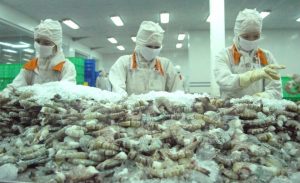
Sydney (VNA) – Australia is willing to consider the import of fresh shrim
p from Vietnam, which is expected to start in early 2017.
The Australian Department of Agriculture and Water Resources expressed the willingness at a working session with Vietnamese Deputy Minister of Agriculture and Rural Development Vu Van Tam during his working visit to Australia from September 8-10.
This constitutes a brilliant opportunity for the shrimp sector as shrimp is consumed most among seafood products in Australia with up to 50,000-60,000 tonnes per year.
As such, Australia must import an average of 30,000 tonnes of shrimp each year. However, strict regulations, especially those on disease control and biological safety, make it difficult for Vietnamese shrimp to enter the market.
Director of Animal Health Department under the Ministry of Agriculture and Rural Development Pham Van Dong said the department has built an action plan on disease control in order to ensure no disease-plagued shrimp is present in Australia.
In recent year, seafood diseases have been put under control thanks to the Government’s investment in human resources and testing equipment, he said, adding that Vietnam is capable of meeting Australia’s requirements on fresh shrimp exports.
Deputy Managing Director of the Vietnam – Australia Group Dang Quoc Tuan stressed the importance of ensuring biological safety in the production value chain to trace the origin of the product.
Therefore, the group has cooperated with leading national and global universities and institutes to establish the Standard Operating Procedure (SOP) to ensure maximum biological safety, he said, adding that the post-examination procedure also receives special attention.
To satisfy the Australian market’s requirements, businesses need appropriate investment and professional management to develop a national brand name for Vietnamese shrimp, thus promoting its value, he suggested.
The Vietnam-Australia Group also pays heed to controlling diseases in separate stages of production while conducting daily, weekly and monthly inspections, he noted.
He expressed his confidence that the group will have an opportunity to export fresh shrimp to Australia in the coming time after Australian competent agencies come to Vietnam for evaluation and testing in the fourth quarter of 2016.
Australia is ranking fourth among countries with high demand for shrimp imports from Vietnam, he said.
That Vietnam could become the first exporter of fresh shrimp to Australia will help businesses increase exports to other markets as Australia is one of the countries with high requirements on biological safety as well as food hygiene and safety, he added.-VNA
Source: http://en.vietnamplus.vn
Agricultural Vietnam relies on imports to feed livestock sector
September 6, 2016
“Vietnam is an agricultural nation, but feed for pigs and chickens must be imported.”
During the first seven months of this year, Vietnam spent $1.8 billion on animal feed imports, the equivalent of 40 percent of the country’s revenue from rice exports, data from Vietnam Customs showed. That figure hit $2 billion in August, and shows no signs of slowing. The United States Department of Agriculture (USAD) forecasts that nearly half of Vietnam’s animal feed will be imported this year.
In recent years, approximately 45 percent of Vietnam’s demand for animal feed has been met by imports of soybean meal, corn and wheat. Local sources mostly provide bran rice and cassava.
“Vietnam is an agricultural nation, but feed for pigs and chickens must be imported,” said Le Ba Lich, chairman of the Vietnam Breeding Association..
Most of Vietnam’s imported animal feed comes from Argentina, accounting for 45 percent of the total value, followed by China and the U.S.
Vietnam has been looking to expand its corn and soybean plantations to minimize its reliance on imports since 2015. In March 2015, the country’s Ministry of Agriculture and Rural Development approved three genetically modified corn varieties for commercial planting, which were then planted a month later, making Vietnam the 29th country in the world to commercialize a biotech crop. However, local corn production still faces challenges from competitive prices offered by India, Argentina and Brazil.
Experts said that Vietnam does not have the best conditions for cultivating animal feed crops like corn, wheat and soybean, and emphasized that Vietnam’s livestock sector is facing many challenges due to market competition in the context of international integration.
Source: www.talkvietnam.com
VIV的第二天,我们依旧收获满满!
VIV的第二天,我们依旧收获满满!
AARTD即将成立十周年,在这9年多里,我们做出了辉煌的业绩,我们为行业内的各大跨国企业寻觅到了优秀的人才,更为行业精英们提供了最适合自己发展,薪资丰厚的广阔平台。
在VIV这种人才济济,各大巨头们相聚的国际盛会中,更多的大型企业找到了我们,成为了我们的客户。同时,我们也结识了很多的尖端人才,行业的中间力量!





人气旺得展位都站不下了,那也不能阻拦企业们求贤若渴的心。



明天还有最后一天,让我们珍惜这相遇,相聚的机会!

为了中国农业及您个人更好的发展,请关注:
我们的网站:https://aartd.com

VIV 的第一天非常棒!感谢大家来和我们相见!
VIV 的第一天非常棒!感谢大家对这次展会的准备,更感谢各来这里和我们相见!
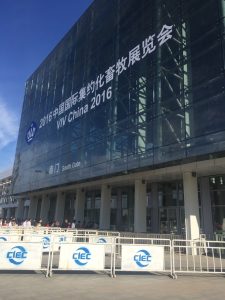
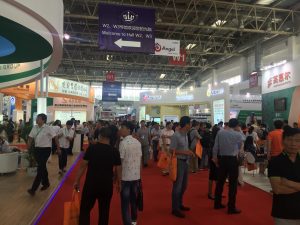
我们的展位:D037



农业畜牧业的精英巨头们齐聚一堂,络绎不绝,万人空巷!







大佬们



更多精彩,明日继续!
我们依旧准备好最棒的一切,在这里等着您!
为了中国农业及您个人更好的发展,请关注:
我们的网站:https://aartd.com
Intelligence Isn’t Black-and-White: There Are 8 Different Kinds
What does it mean when someone calls you smart or intelligent? According to developmental psychologist Howard Gardner, it could mean one of eight things. In this video interview, Dr. Gardner addresses his eight classifications for intelligence: writing, mathematics, music, spatial, kinesthetic, interpersonal, and intrapersonal.


